

ANSONIA – The Ansonia Board of Aldermen voted 10-0 to adopt a $69,613,840 budget April 21 and send it out to voters for a referendum.
The budget referendum is scheduled to take place 6 a.m. to 8 p.m. April 25 at the Ansonia Armory, 5 State St. Voters will have the option to accept or reject the city’s side of the budget, as well as the board of education’s side of the budget.
The end of this article contains information on how the referendum will work.
The budget includes a mill rate increase of 29.62 mills. That’s a 3.13 mill increase from the current mill rate of 26.49 mills.
That is a mill rate increase of about 11.8 percent.
Residents Question Budget Process, WPCA Sale
Seventeen people spoke at a public hearing before the Aldermen vote. Thirteen of those speakers were either opposed to the budget or had concerns with it. Four speakers said they supported the budget.
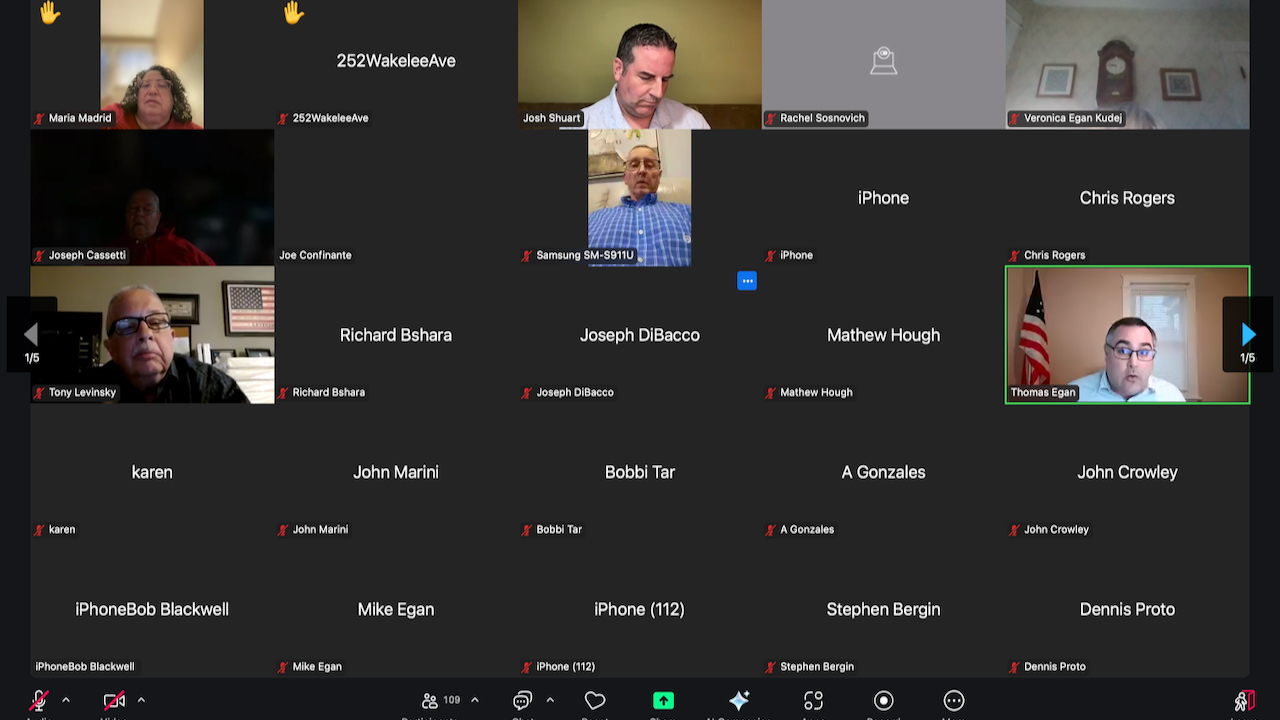
Around 113 people attended the public hearing, which was held via Zoom. Multiple speakers said the budget process wasn’t transparent, and questioned the city’s $41 million sale of its WPCA.
“If that was sold, where did that money go for the city of Ansonia?” asked city resident Dina Rodriguez.
“If you’re proposing all of these budget increases and mill increases, what happened to all the money that supposedly came into the city in the last five years?” Rodriguez asked.
City resident Kerry Salemme said the city sidewalks are overgrown with weeds and covered in graffiti. She said she’s not opposed to a tax increase, but that she wants to see more for it.
“You want to raise my taxes? OK, wonderful. I want a great sports complex for our children, I want our kids to have the best education,” Salemme said. “But you can’t raise our taxes and then sit here and look like we live in the slums of Bridgeport “
Former tax board member Joe Confinante criticized the city’s use of its fund balance. He said the numbers the city gave to the public are confusing and that it’s difficult to track how the city spends money.
Confinante said he doesn’t trust the city’s budgeting process.
“I believe some of the money’s been taken out of the fund balance over a number of years, dumped into the budget in lieu of raising taxes,” Confinante said. “That’s nice we didn’t raise taxes. But at some point in time, it’s going to catch up with us. And I believe it has.”
Confinante was also one of at least seven speakers who criticized the fact that the meeting was held via Zoom. He said he experienced technical difficulties, and that the meeting should have been held in-person.
Aldermen meetings went online during the COVID-19 pandemic and have not returned to in-person.
“I think you’d have a lot more representation if we had this meeting at the high school. I believe it’s an ‘out of sight, out of mind,’” Confinante said. “You know you’re going to get people. You’ve got a hundred and something people on this right now, it’s a Zoom call.”
Three speakers in the meeting spoke in support of the board of education’s budget request. The school board’s request is for $39,560,719, a 5.3 percent increase compared to the current budget.
They said the board’s request is due to a lack of support from the state, and that the schools are doing the best they can with the money they have.
“I’ve seen the worst, and now we’re experiencing the best, and that’s been through the partnership between the city and the superintendent and the board of education and the Board of Aldermen,” said Ansonia teachers’ union president Mathew Hough.
Hough, who teaches at Ansonia Middle School, asked the public to vote “yes” on the board of education’s budget request.
Click here for a previous story about the school budget.
Property Tax Bills
The mill rate is part of the formula towns use to determine property tax bills.
If the budget is approved, a single-family home on Holbrook Street assessed at $180,000 would pay $563.40 more next year in taxes.
A house on Gardners Lane assessed at $248,000 would pay $776.24 more next year.
A house on High Acres Road assessed at $366,000 would pay $1,145.58 more next year.
The budget includes city-side spending of $30,053,120, an increase of $526,027 from the current year. That’s a 1.8 percent increase.
It also includes school spending of $39,560,719, an increase of $1,984,507 from this year. That’s a 5.3 percent increase.
Members of Mayor David Cassetti’s administration said the proposed budget includes a decrease in the motor vehicle mill rate from 32.46 mills to 29.62 mills. That’s an approximate nine percent decrease.
However, speakers at the public hearing said it doesn’t make sense to compare motor vehicle mill rates with property taxes. They pointed out that property taxes are usually a much higher dollar amount than car taxes.
City resident Chris Rogers criticized a recent robocall from Cassetti which said the property tax increase is offset by the car tax decrease.
“You’re not even comparing apples to apples here. The mayor is trying to fool the community into buying this proposed deal for the budget, which is a bunch of B.S.,” Rogers said.
Ansonia Budget Director Kurt Miller said the city can’t use much of the WPCA sale money to offset tax increases. He said it wouldn’t be sustainable in the long term.
“While it works in the short-term, it’s not something that will work over an extended period of time. So you reach a point where you need to start slowly backing things down,” Miller said.
Miller said that if the budget is rejected by voters, the Aldermen may need to start having difficult conversations.
“If it’s a very big ‘no’ vote, then at that point you’re going to have to start making some very hard decisions with staffing, and departments, and potential projects and initiatives and things like that,” Miller said.
Referendum Is April 25
The budget requires voter approval due to charter changes made by Cassetti’s administration in 2015. The charter requires voter approval for any budget with an increase in ‘net taxes to be collected’ of more than 3 percent.
‘Net taxes to be collected’ refers to the total amount of tax dollars the city anticipates collecting in the year. That number can change based on the mill rate, changes in the city’s grand list, and other factors.
The budget includes $41,289,085 in net taxes to be collected. That’s an increase of about 9 percent, compared to the $37,864,585 in the most recent budget.
Voters will be asked two questions, according to the charter. Those questions are:
Shall the city portion of the budget, as recommended by the board of aldermen of $30,053,120 for the fiscal year 2026 be adopted?
Shall the board of education portion of the budget, as recommended by the board of aldermen, $39,560,719 for the City of Ansonia for the fiscal year 2026 be adopted?
Voters will additionally be able to vote “too high” or “too low” on each of the proposed budgets.
If voters reject the proposed budget, it heads back to the Board of Aldermen for discussion and modification. A new public hearing will also be held.
The next public hearing and meeting is scheduled on Zoom for May 5 if needed, according to the city website. A second referendum is scheduled for May 9 if needed.
First Robocall Sent To City Residents Contained Misinformation
On April 17, Cassetti sent a robocall to city residents about the hearing containing several mistakes.
Cassetti sent two follow-up robocalls, on April 18 and April 20, to “clarify” the first call’s errors.
The initial robocall said the proposed budget contains a 2.8 percent mill rate increase. However, the budget actually contains a 3.13 mill rate increase. That’s 11.8 percent higher than the current mill rate.
The robocall said the mill rate would be 29 mills if the budget is approved. The mill rate in the proposed budget is 29.62 mills.
The initial robocall also said the budget includes a $5.2 million spending increase for Ansonia Public Schools, and a $1.7 million spending increase for city services. Neither of those numbers are accurate.
The proposed budget includes a school spending increase of 5.3 percent, and a city spending increase of 1.8 percent.
The school spending increase amounts to $1,984,507. The city spending increase amounts to $526,027.
The robocalls sent on April 18 and 20 corrected the inaccurate numbers. However, the robocalls to correct the record also had a mistake, saying the mill rate on motor vehicles was decreasing by 2.5 mills, when the decrease is actually 2.84 mills.