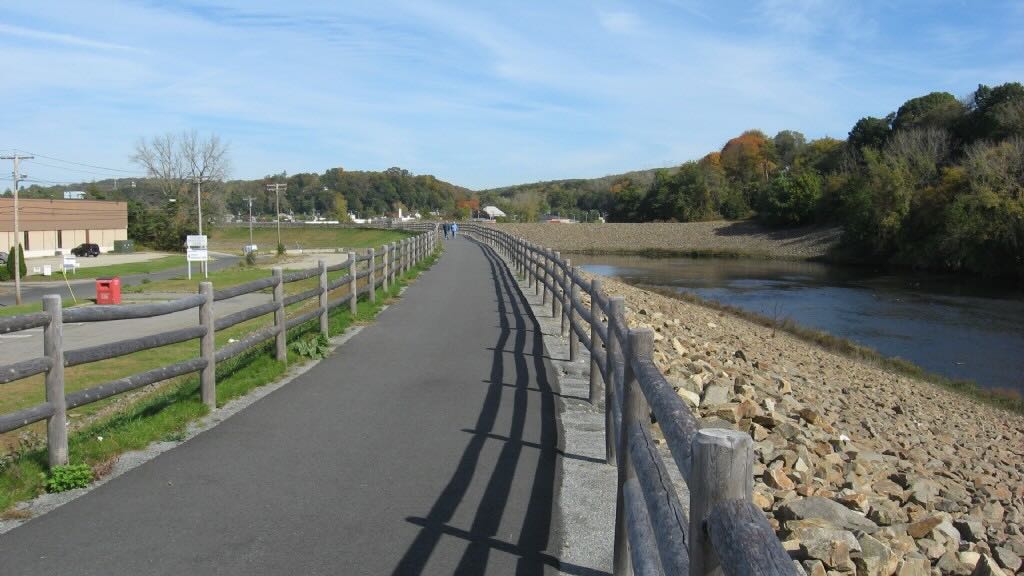
ANSONIA – The city is receiving a $789,000 state grant to improve sidewalks around the middle school on Howard Avenue and pedestrian access to the segment of the riverwalk off Pershing Drive.
“Ansonia Middle School is smack dab in the middle of a residential area that is right between Griffin Hospital and all the retail on Bridge Street and Clifton Avenue, so there’s a need for safer streets in that area, as there is with Riverwalk, which is several blocks away,” said state Sen. Jorge Cabrera.
The grant was announced in a press release from Gov. Ned Lamont’s office Nov. 17. It was part of a larger, nearly $12 million allocation from the state to towns across Connecticut. The money comes from the Connecticut Department of Transportation’s Community Connectivity Grant Program.
“Connecting residents with their communities through these projects is vital to boosting economic development, creating dynamic town centers, and encouraging alternative modes of transportation like walking or biking,” the governor said in a press release.
Ansonia is looking to expand its grant-funded river walk and to eventually connect with a river walk in Seymour. It was awarded a $3.8 million grant earlier this year to expand the river walk from Pershing Drive to the area of Nolan Field.
A statement from Ansonia Mayor David Cassetti indicated the improvements in the middle school area will make it easier for people in nearby neighborhoods to access the riverwalk.
“We have prioritized and applied for this grant which will help create a safer route for children to the Ansonia Middle School and improve existing sidewalks in the area. The grant will also allow us to connect with the Ansonia Riverwalk Segment,” Cassetti said.
State Rep. Kara Rochelle also reacted positively to the news in a post on Facebook.
“Great news! More state funding coming to the 104th! This Community Connectivity Grant is a state-funded program which provides financial support for local infrastructure initiatives that make conditions safer and more accommodating for pedestrians and bicyclists in urban, suburban, and rural centers,” Rochelle said.