

CORRECTION: The Valley Indy has been reporting that a referendum in Ansonia is required if a mill rate increase totals three percent or more. THIS IS WRONG.
Ansonia City Corporation Counsel John Marini and Ansonia Economic Development Director Sheila O’Malley told The Valley Indy on April 8 that a referendum is triggered if the budget approved by the Ansonia Board of Aldermen represents an increase of three percent or more in net taxes to be collected from the previous year’s budget.
The Valley Indy regrets the error.
April 8, 2025
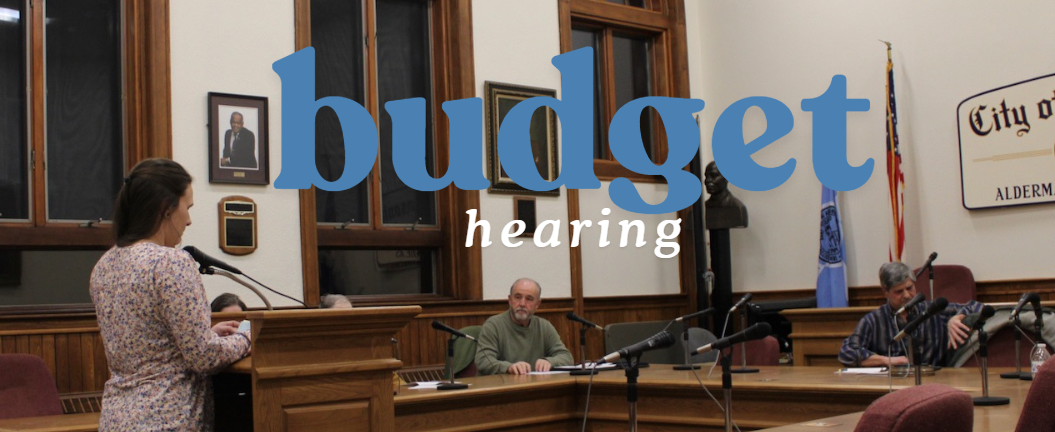
ANSONIA – Ansonia residents raised questions about topics ranging from Aquarion’s new sewer bills to the sales of city properties at a public hearing on Feb. 24.
The public hearing was called by the city’s tax board over a proposed budget that would raise the city’s tax rate by 2.61 mills.
The new proposed tax rate is 29.1 mills, a 9.85 percent increase compared to the current 26.49 mills.
At the hearing, Marsha Benno, a city resident who works as Woodbridge’s tax assessor, said the city should keep the tax rate increase below three percent.
“I just want you to really consider keeping the budget under three percent,” Benno said. “It’s ridiculous to say that we have to put up with a nine percent increase, where is that money going? It’s not all for benefits and employee raises and healthcare. There’s some chunk that’s going somewhere. Why do you need that extra 6.8 percent increase?”
Benno was previously the Ansonia tax assessor.
Dayna Dalton, the city’s assistant tax assessor, said the city should meet with her office more often to aid in financial planning. She said the city struggles to bring in revenue because of tax breaks given to major developers.
“Our tax incentive agreements that we’re agreeing to (are) greatly hurting our grand list,” Dalton said. “We have something called ‘top ten taxpayers’ for each town and, for Ansonia, all of our properties that are currently part of tax incentive agreements are part of that ‘top ten taxpayers’ list.”
She also said the city has a habit of selling its belongings for less than they’re worth.
“Selling city assets below market value, or leaving very valuable assets behind, is something that we seem to do. So there’s just a lot to think of in regards to that,” Dalton said.
Frank Pergola, an Ansonia resident and chairman of the city’s conservation commission, had criticism for one sale in particular – last year’s sale of the city sewer system to private utility company Aquarion.
“There should have been a referendum, period. There wasn’t, that’s the way it goes,” Pergola said.
Mayor David Cassetti’s administration sold the sewer system last year, saying it would prevent future mill rate hikes. Now Aquarion is in the process of being sold to the Regional Water Authority.
Under the budget’s proposed mill rate increase, a single-family home on Holbrook Street assessed at $180,000 would pay $469.80 more per year in taxes.
A house on Gardners Lane assessed at $248,000 would pay $647.28 more per year.
A house on High Acres Road assessed at $366,000 would pay $955.26 more per year.
Tax bills are calculated by multiplying the assessed value (not the appraised value) by the mill rate and then dividing by 1,000. Click here to look up your address and find the value.
During the hearing, four other residents rose to ask about their new sewer bills from Aquarion. Members of the tax board responded that they weren’t involved in the sale, and that they were just as confused as the residents.
Cassetti issued a robocall Feb. 24 to address the confusion.
The first bill covers a 44-day period and thus has a higher cost than a regular monthly bill, according to the mayor. The second bill covers one month and is closer to what ratepayers can expect to see in the future, he said.
In total, about 35 people attended the public hearing, and 10 people spoke. City resident Mike Dalton said the city should do more to get more people involved at future hearings.
“Judging by how many people are here, I mean I think this place should be stacked. You guys should want questions, you guys should want more ideas, and there’s not that many people,” Dalton said.
At the end of the hearing, the tax board was scheduled to meet to discuss the mayor’s proposed budget. However, the board canceled the meeting after the hearing ended, citing a lack of agenda items.
The next step is for the tax board to host a series of public meetings where it will discuss the details of the proposed budget. Those meetings have not yet been scheduled.
According to the charter, the tax board must present a budget to the full Board of Aldermen by March 11. In Ansonia, the Aldermen have final say over the budget.