

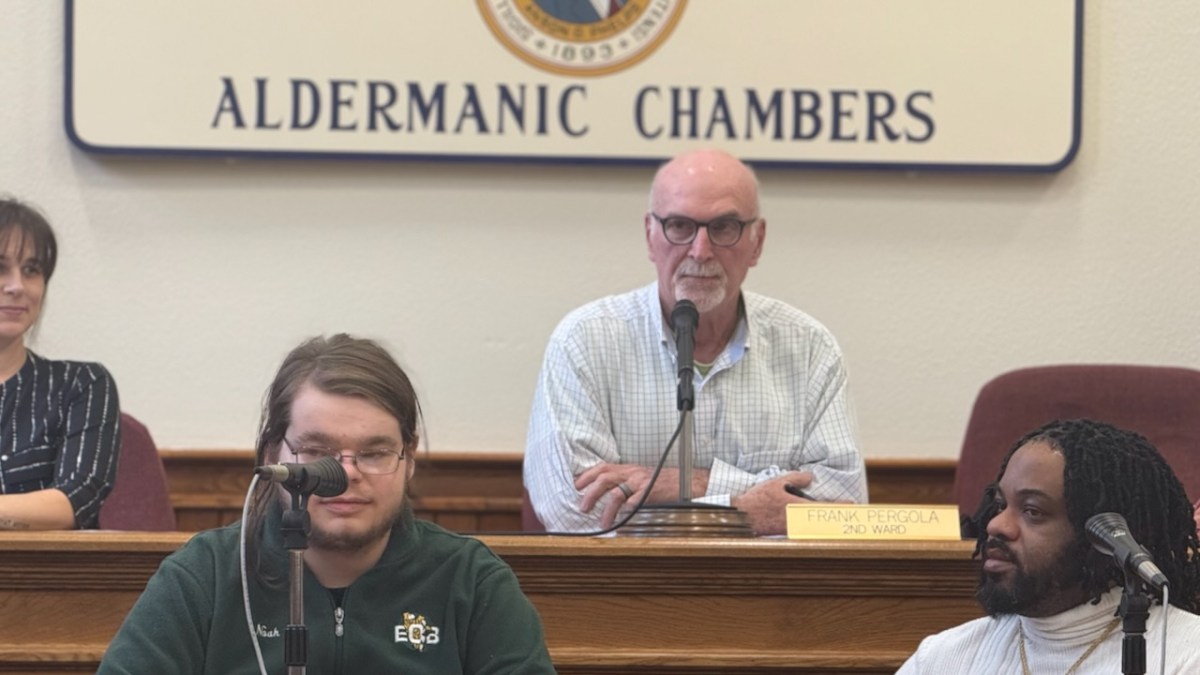
ANSONIA – The city’s Board of Aldermen scheduled a public hearing over Mayor Frank Tyszka’s $68.1 million budget proposal April 30.
The public hearing is scheduled for 7 p.m. at the Aldermanic chambers in city hall (253 Main St). However, Aldermanic President Frank Pergola said the location may be changed.
The tax board voted April 22 to send Tyszka’s budget proposal to the Aldermen unchanged, after more than a month of deliberations over potential reductions. The public hearing is the next step toward adopting a budget.
Under Tyszka’s proposal, the city’s mill rate would increase by 2.27 mills, from 28.55 mills to 30.82 mills.
Click here to view Tyszka’s proposed budget.
Click here for a previous story about the proposal.
The budget in its current form would require voter approval at a referendum before it could be adopted. The charter requires a public vote if a budget would increase the “net taxes to be collected” by more than 3 percent.
The Aldermen could still make changes to the budget before sending it to a vote.
The budget proposal would flat-fund Ansonia Public Schools at $38,612,089 and reduce spending on the city side of the budget by about $20,000, to $29,484,066.
Tyszka has said a tax increase is still needed due to budget decisions made under his predecessor, David Cassetti.
Mill Rate Impacts
Under the proposed budget, a single-family home on Holbrook Street assessed at $180,000 would pay $408.60 more per year in taxes.
A house on Gardners Lane assessed at $248,000 would pay $562.96 more per year.
A house on High Acres Road assessed at $366,000 would pay $830.20 more per year.
Tax Board Leaves Budget Untouched
The Board of Apportionment and Taxation (or tax board) has the power to change the mayor’s budget proposal before sending a budget to the Board of Aldermen.
The tax board had considered making large reductions to Tyszka’s budget in past meetings.
However, at a meeting April 22, tax board chairman Edward Norman said the board would not make any changes. He said the tax board is powerless under charter changes passed under the Cassetti administration in 2014.
“The Board of Apportionment and Taxation lost all control of budgeting when they changed the charter,” Norman said. “It’s a misnomer that we have anything to do with appropriations. We can only make recommendations.”
The board voted 5 – 1 to send Tyszka’s budget to the Aldermen unchanged. Tax board member Richard Thayer voted against it, while tax board vice chairman Nunzio Parente abstained.
The tax board in past years has made changes to the budget before holding budget votes. However, the budget process has changed year-by-year, and it has been difficult to follow across mayoral administrations.
Tyszka, who attended the tax board’s meeting, said that a recently re-formed charter revision commission will be asked to consider giving budget control back to the tax board for future years. Any changes to the charter would require approval by voters.
“We’re going to look at giving the power back to the Board of Apportionment and Taxation, because you people have the time and the skills to do this right,” Tyszka said.
Budget Doesn’t Include Fuel Cell Payments; Tyszka Says Deal In The Works
The city’s current budget – which was passed under Cassetti’s administration – ran into trouble after it didn’t include about $1.55 million in debt payments.
Those payments were for a fuel cell which was supposed to be up and running in 2025. They were supposed to be covered by revenue from the fuel cells, but the fuel cells haven’t been built.
Click here for a past story about the deal.
Tyszka said his new budget proposal does not include the $3,039,812.50 in payments which will be due in the coming fiscal year. He said he’s been talking with state regulators to get the fuel cell built.
“It’s not in there, because we’re trying to figure out how we’re going to pay the $37 million bonding that we’re negotiating with that. I can’t negotiate that in public, but we’re working (on) that,” Tyszka said. “We’re making progress, so that’s all I can say on that right now. So it’s not in there, and we’re not looking to put it in there.”
Next Steps
After the public hearing, the Ansonia Board of Aldermen could vote to make further changes to the budget.
If the Aldermen vote to approve a budget with an increase of 3 percent or more in “net taxes to be collected,” it will head to voters for approval. The current budget proposal increases that number by about 9.98 percent.
At a referendum, voters could then vote to approve or reject the city-side and board of education budgets separately.
The city has a deadline of June 20 to adopt a final budget. If it has not adopted a budget by that date, then tax bills will be sent out based on the current budget’s mill rate.
The proposed budget would cover the fiscal year beginning July 1, 2026 and ending June 30, 2027.