

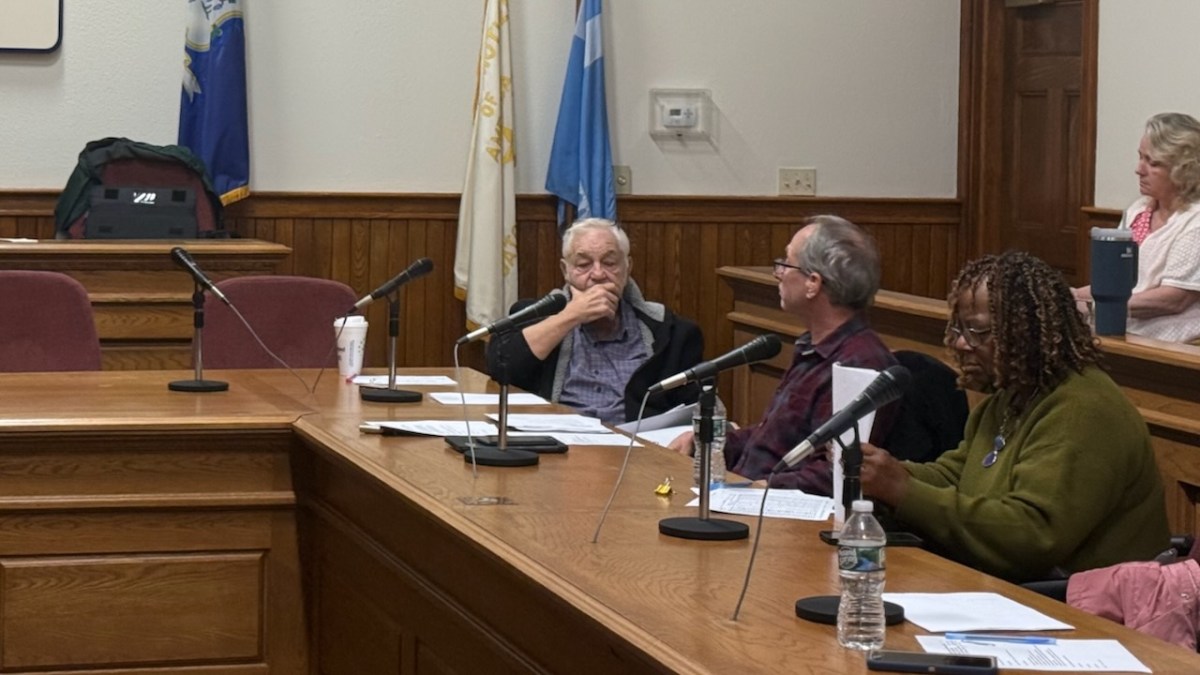
ANSONIA – Members of the city’s tax board voted unanimously Nov. 2 to reject a request to buy a new vehicle for Ansonia Rescue Medical Services (ARMS).
Members of the Board of Apportionment and Taxation voted 5 – 0 to reject the measure. Board member Cheryl Flaherty abstained.
ARMS is the city’s city’s EMS service.
The written request, from ARMS Chief Michael Warhola, sought to spend $90,484.81 on a new Ford Expedition truck “to support ongoing emergency services, including first response activities, standbys, and patient followup.”
The requested vehicle is an SUV which would be equipped with sirens and available for use by ARMS staff. It is not an ambulance.
The money for the purchase would have come from opioid settlement funds allocated to Ansonia by the state. The use of that money is restricted to programs that mitigate the opioid crisis, according to a letter from the city’s corporation counsel.
Warhola’s letter said the new vehicle would meet that purpose because it would be used to do outreach relating to opioids and deliver Narcan (or naloxone) kits to families who may need them.
However, multiple tax board members said during the Nov. 2 meeting that they didn’t believe the vehicle would be used for its stated purpose. They said it seemed like the department wanted to use the money for a new truck it doesn’t need.
“I’m sorry, but it’s ridiculous,” said board member Dan King. “They’re trying to find an answer for why they need it.”
Tax board member Nunzio Parente said he would have expected more notice if the truck was needed.
“I don’t remember seeing anything where they said, ‘Just to let you know, in the future, we’re going to need this vehicle,’” Parente said.
Included with Warhola’s request was a letter signed by attorney Caroline Baird, a member of the city’s corporation counsel. Baird’s letter said the vehicle would be legal use of the money as long as it’s used appropriately.
“It is my opinion that yes, the City of Ansonia can use the Opioid Settlement funds to purchase a vehicle for ARMS so long as the primary function of the vehicle is to advance programs to reduce opioid use and aid and assist within the community of opioid use and avoidance,” Baird wrote.
Other municipalities in Connecticut have used the settlement funds to refurbish and make repairs to ambulances.
Baird’s letter pointed to other examples where opioid settlement funds were used on vehicles. One example was in Wyoming, where a drug court deputy’s patrol truck was replaced using opioid settlement money. Another was in North Carolina, where $10,000 was spent on “a robot ambulance with big eyes and an audio system through which a human operator can discuss the dangers of drugs.”
King said he doesn’t buy the legal opinion. He said what ARMS is requesting is not the same as the examples provided in Baird’s letter.
“They really had to stretch on these opinions, to find examples,” King said.
King suggested the money should instead be used to provide Narcan training and kits to police officers. He said he had seen two medical incidents where Narcan would have helped but wasn’t available.
“The police and first responders, they should absolutely have it. There were two medical emergencies where they needed it, and I was told ‘Nope, we don’t have it,’” King said.
Diane Stroman, another member of the tax board, also said she wanted more information on how the money would be used. She said she wanted to see a more detailed plan regarding how ARMS would use the vehicle for drug prevention programs.
“Do we even have this kind of program? Or are they going to make a program? I mean, it sounds like it’s money, so we just spend the money,” Stroman said.
Stroman said she’s willing to consider the request in the future if the tax board receives an explanation from Warhola.
Warhola was not at the Nov. 2 meeting due to a schedule conflict with an ARMS commission meeting. However, he said in a phone interview Nov. 4 that he’d be willing to show up before the tax board at their next meeting and explain his plans.
He said he made the request after talking with Griffin Hospital officials about opioid-related incidents.
“We have an old vehicle that we are currently using. And the purpose of it was so that we have a reliable vehicle to be able to go out and do follow-ups with our opioid patients and drop off Narcan leave-behind kits, and stuff like that,” Warhola said. “Griffin Hospital has wanted to see something the Valley services do to aid in that type of scenario.”
Warhola acknowledged that the vehicle could be used for non-opioid incidents as well. However, he said that’s necessary because ARMS members would be on-call when doing follow-up visits to opioid patients.
“It needs to be listed as dual-purpose, because if people are out doing follow-ups, they would be on-duty and need to be able to respond to emergencies as well,” Warhola said.
The full cost of the requested purchase includes $51,850 for the vehicle itself, plus $38,634.81 for truck modifications including sirens and speakers. You can view the breakdown here (scroll to page 11 for Warhola’s request).
The tax board could consider the request again at their next meeting, currently scheduled for Dec. 7.