

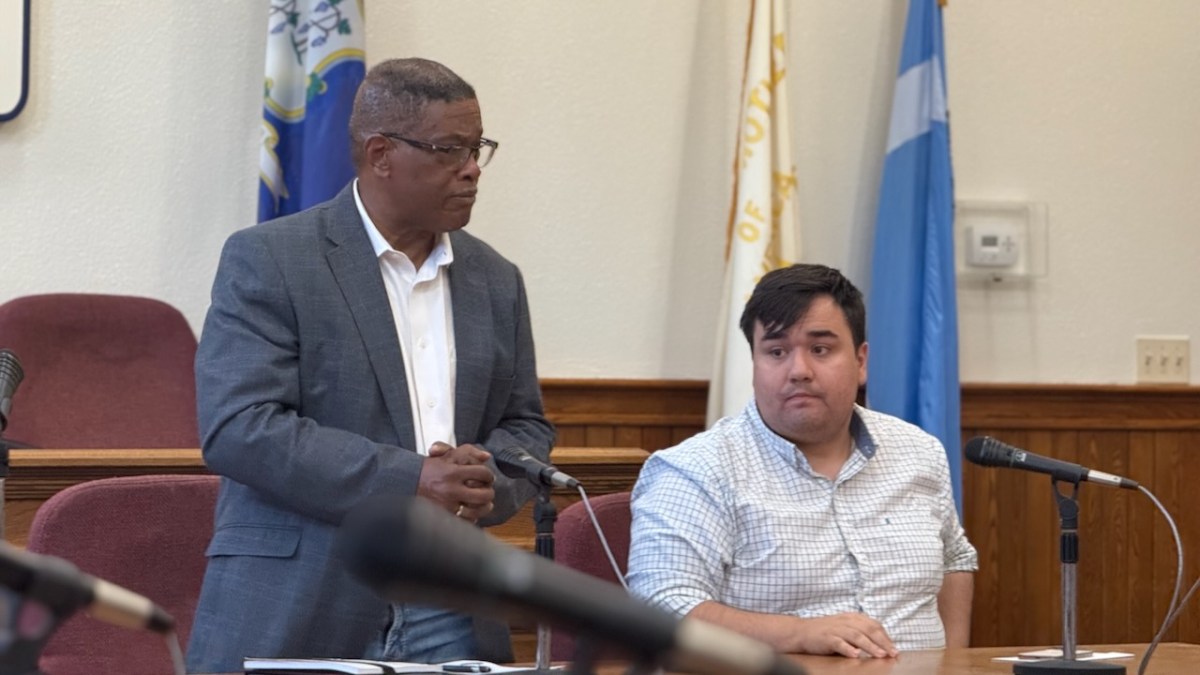
ANSONIA – At a public hearing over a slate of proposed charter revisions July 23, four speakers asked for voters to continue having a say in the annual budget process.
The public hearing focused on a set of proposals which could change how budget referendums are triggered in Ansonia and whether the results of the referendums could be set aside.
Five people spoke in the hearing about the budget process. Four of them said they’re opposed to a proposed change which would allow the Aldermen to disregard a budget referendum’s results if fewer than 15 percent of voters show up.
“This seems very undemocratic to me, and so I oppose it,” city resident Selina Rifkin said of the proposal.
Speaker Michael Egan said the same, asking the city to find ways to cut costs by regionalizing services with Derby instead of tweaking the public’s influence over spending plans.
“I beg you, do not change our right to vote as it stands now. The blame game is over. Work in the present,” Egan said.
Eddison Buenaño, who spoke at budget public hearings before the tax board earlier this year, said he could get on board reluctantly with other proposed changes – such as one which would cause a referendum to be triggered by a 4 percent increase in city expenses. Currently, referendums are triggered by a 3 percent increase in ‘net taxes to be collected.’
However, he called the proposed turnout requirement “disingenuous” and said that it’s a no-go.
“There are many ways to achieve what the town needs, and I just think this way that is being presented is not the best way at all. I only ask that, if there is another solution out there, we should find it,” Buenaño said.
Background
The commission has been meeting since May. They’re tasked with coming up with charter revisions for voters to consider in November.
Prior to the commission’s formation, Mayor Frank Tyszka said he’d like to see reversed a set of budget-related charter changes which were supported by his predecessor, David Cassetti, in 2013.
In the months since May, members of the commission have floated ideas that would modify, but not reverse, those changes.
The proposed ideas include:
- Changing the trigger for a referendum. Currently, a referendum is triggered when a budget proposal would increase the ‘net taxes to be collected’ by more than 3 percent. The commission has considered changing the trigger to whenever city expenditures increase by more than 4 percent.
- Instituting a turnout requirement for a referendum, where the Aldermen would be able to bypass the referendum results and adopt a budget if not enough people show up to vote.
- Increasing the public notice period for a referendum, giving 14 days’ heads-up instead of five.
- Changing a series of budget deadlines to give city officials more time to propose a budget.
- Changing the promotion system for the fire department.
Any proposed changes would need to be approved by voters before they become law.
Government Officials: We Need To Find $3.25 Million Next Year
This year, Ansonia was given a $3.25 million “Ansonia Rescue Fund” by the state. That’s a one-time payment which is not scheduled to come in again next year.
Two speakers who have worked in Ansonia’s government said the city will need to address the revenue hole when the next budget season rolls around.
Daniel Stahl, an Alderman representing the city’s sixth ward, and Richard Bshara, a longtime finance department employee who retired last year, both addressed the proposed charter changes through the lens of that $3.25 million question.
Stahl spoke in favor of changing the referendum’s trigger from “net taxes to be collected” to city spending increases. He said it will make it easier to fill the $3.25 million gap next year.
“We need to figure out a way to make it easier for the town to cover shortfalls, and I wholeheartedly agree that instead of looking at holding revenues steady, we need to look at holding expenses steady,” Stahl said.
He said the change is necessary in order to keep the city’s financial situation stable.
“A year from now, we are going to be in fiscal calamity should we not create a change to the process,” Stahl said.
Bshara said he’s opposed to changing the trigger to city spending increases. He said the proposed change would allow city officials to cover the $3.25 million hole through taxes and add up to $2.8 million in additional spending on top of that.
“By approving $2.8 million in expenditures without a referendum, and needing to cover a $3.2 million revenue loss, the net taxes to be collected, or tax billings for the following fiscal year, will need to go up by $6 million,” Bshara said. “That would be a 14 percent increase in the tax collection rate, and this would be without the taxpayers having any say at all.”
Instead, he suggested keeping referendums based on “net taxes to be collected” and changing the specific referendum threshold.
“I would keep the basis of the threshold for a referendum based on the net taxes to be collected. I would change the percentage to six percent,” Bshara said. “That would allow for an increase currently of about $2.5 million before a referendum would be required.”
Next Steps
The commission needs to approve a draft report to send to the Board of Aldermen. That could happen at a meeting scheduled July 30. Check the city website in case the date changes.
After the commission sends their report, the Board of Aldermen must hold a public hearing. That board has the ability to modify the recommendations before finalizing questions to send to voters.
The deadline to finalize questions for the ballot is Sept. 4.