
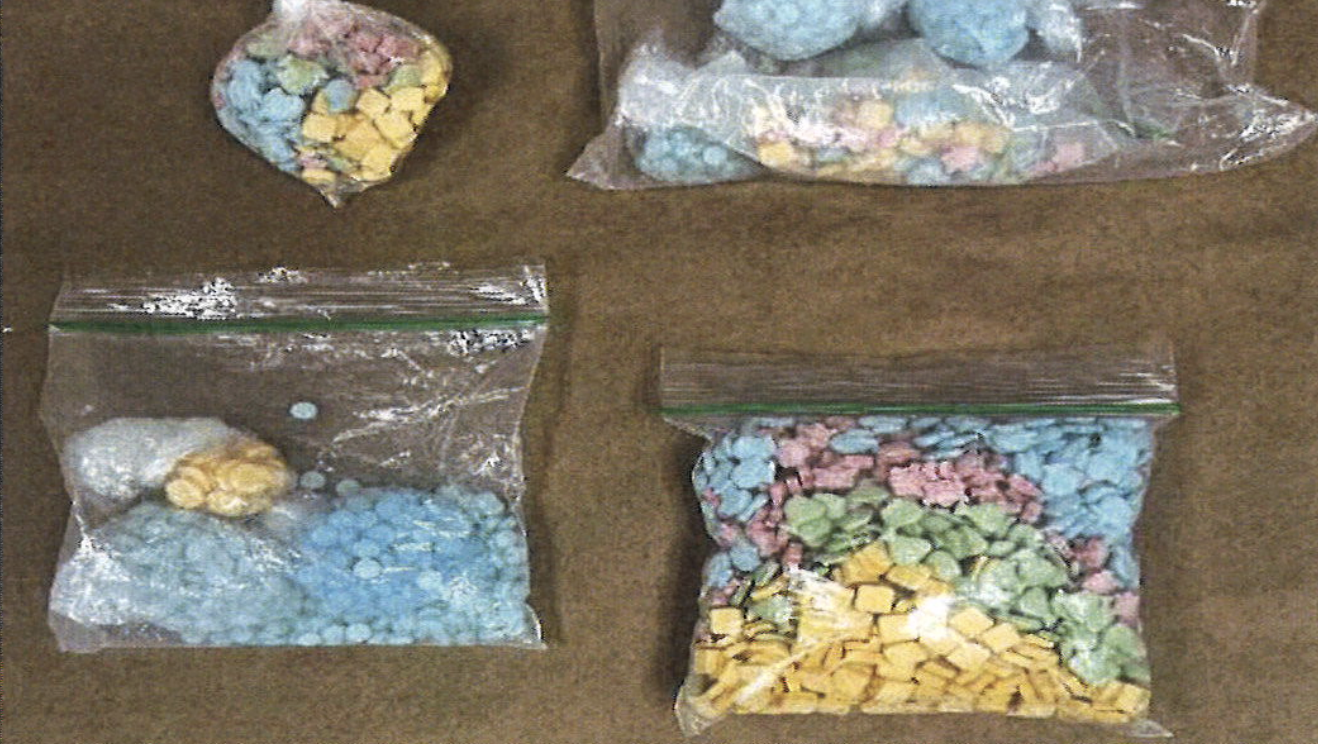

ANSONIA – A federal grand jury indicted an Ansonia man July 17 who allegedly ran a counterfeit pill factory out of his Woodbridge Avenue apartment.
Hector Gonzalez, 42, was charged with conspiracy to distribute controlled substances, possession with intent to distribute, possession of a firearm in furtherance of a drug trafficking crime, and unlawful possession of a firearm by a felon.
Also indicted was Darel Edwards, 48, of New Haven, who investigators say purchased pills from Gonzalez to resell. Edwards was charged with conspiracy to distribute controlled substances, possession with intent to distribute, and unlawful possession of a firearm by a felon.
In a press release, the United States Attorney’s Office said Gonzalez manufactured counterfeit pills, made to resemble Oxycodone and Adderall, which contained illicit substances including fentanyl, carfentanil, methamphetamine, cocaine and xylazine.
“Gonzalez distributed the pills through a network of associates, including Edwards, who sold them to customers in Connecticut and, using the U.S. Mail, to others out of state,” the press release says.
Federal Investigation Started After Mail Interception
An affidavit authored by DEA Special Agent Margaret Lang describes an investigation into Gonzalez dating back to 2021.
According to the affidavit, the DEA was first alerted to suspicious activity after authorities from U.S. Customs and Border Patrol (CBP) intercepted about 11 packages mailed to Gonzalez between August 2021 and August 2022.
Those packages included parts for machines that could be used to manufacture pills.
In August 2024, DEA investigators recovered phone messages in which Gonzalez allegedly asked about purchasing a “punch die,” a device used to imprint pills with a specific design.
Then, in March 2025, Gonzales allegedly described pill-making devices he was looking to buy in a phone call. The devices included “punch dies” with designs including a money bag, and “compression binder,” a substance which binds different ingredients together to create pills of specific colors.
Gonzalez agreed in the phone call to buy about 10 kilograms of orange and purple compression binder, the affidavit says.
Investigators Watched Alleged Drug Deal Involving Indicted Men
Investigators monitored what they believed to be a pill purchase involving Gonzalez and Edwards, the other indicted man, in May 2025. While observing a New Haven home connected to Gonzalez, they watched Edwards enter and then leave.
About five minutes after Edwards left, a state police vehicle attempted to stop Edwards, but Edwards allegedly sped away. Investigators were able to locate Edwards’ car, parked and empty, about eight minutes later. The car was towed.
Edwards was charged in state court with reckless driving and engaging police in pursuit in connection to the incident.
Investigators believe Edwards was operating “as a bulk redistributor of Gonzalez’ pressed and counterfeit pills both locally and through the U.S. Mail.”
Authorities Arrest Gonzalez Following Traffic Stop, Phone Monitoring
In July 2025, investigators orchestrated a delivery of the devices Gonzalez allegedly sought. An undercover officer left four packages for Gonzalez containing compression binder and a punch die.
As that investigation was ongoing, state police officers pulled Gonzalez over near Route 8 in Bridgeport in September 2025. During the stop, officers brought out a drug dog, which allegedly detected drugs in Gonzalez’ car.
State police officers then searched the center console of his car, where they allegedly found at least four plastic bags full of pills. The pills were stamped with designs Gonzalez had previously discussed in monitored conversations – including the money bag design, Apple logos, Instagram logos, the side profile of a man, and a “pink panther” design.
Officers sent the pills to the Connecticut State Lab for testing.
“The pills contained a variety of controlled substances and cutting agents, including but not limited to: fentanyl, carfentanil, methamphetamine, xylazine, tramadol, oxycodone, and cocaine,” the DEA affidavit says.
During the same traffic stop, officers also allegedly found a loaded Glock handgun underneath the passenger seat of Gonzalez’ car. Police also confiscated Gonzalez’ phone during the stop.
After obtaining a judge’s permission to search the phone, investigators went through the phone’s camera roll. There, they allegedly found videos showing pills being made in Gonzalez’ apartment; images of Glock-style handguns; and screenshots of websites with information on pill-press machines.
Between April and June 2026, investigators continued to monitor phone texts and calls involving Gonzalez, in which he allegedly said he was looking for a replacement part for his pill-press machine. Gonzalez also complained in the messages that his packages were being seized by federal agencies, investigators said, and he agreed to purchase more compression binder substances.
Federal authorities arrested Gonzalez June 30 and searched his Woodbridge Avenue home the same day. Inside, investigators said they found three pill-press machines, more than two kilograms each of fentanyl and methamphetamine, two firearms, about $280,000 in cash and diamond-encrusted jewelry.
Gonzalez has been detained since his arrest. If convicted, he would face between 10 years and life in prison.
Edwards was arrested the same day as Gonzalez and could face between five and 40 years if convicted of his charges.