

.jpg)
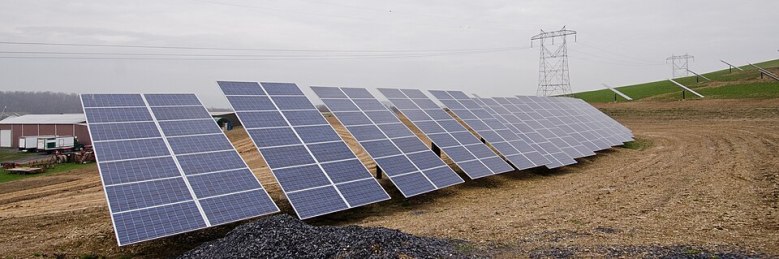
SEYMOUR – A solar farm company purchased a 121-acre farm last year for $1.5 million, but it’s not clear what the company intends to do with the land.
According to town land records, the property located at 66 Buckingham Road and 6 Julie Drive – formerly known as the Ryan’s Farm property – was purchased March 6, 2025 by Vineyard Sky Farms Corp.
The company has solar farms in Madison, Plainfield and Sherman and has two projects underway on Ansonia’s hilltop.
The Valley Indy sent emails and left voicemails for company officials seeking comment but did not hear back.
Talk about last year’s sale was brought up in an ongoing controversy over land use regulations at Red Clover Farms on South Benham Road.
A Complicated Controversy
Last spring the Town of Seymour’s zoning enforcement officer issued a cease and desist order against Red Clover for holding commercial activities not allowed on the property. The farm appealed the ZEO’s order to the Seymour Zoning Board of Appeals.
Dozens of people attended public meetings. Most speakers supported the farm.
On social media, the Red Clover cease and desist spawned accusations of political influence, conflicts of interest, and of nefarious forces wanting to push Red Clover off the land for development purposes.
The chatter is fueled by the fact Al Bruno, a lawyer and elected member of the Board of Selectpersons, filed a complaint against the farm that prompted the ZEO to get involved.
Bruno lives next to the farm and said Red Clover had been using the farm for non-agricultural, commercial activities that are not allowed in a residential zone. Click here for a story that delved into the history between the parties.
Compromises
However, First Selectwoman Annmarie Drugonis’ administration has shown a willingness to compromise with Red Clover Farms.
Bruno is a member of Drugonis’ administration, having run on the Republican ticket and currently serving as deputy First Selectman.
Two tracks developed with the controversy – one involving the Seymour Zoning Board of Appeals, whose members upheld the cease and desist as justified and legal based on the town’s land use rules; and one involving the Seymour Planning and Zoning Commission whose members, at Drugonis’ suggestion, added ‘agritourism’ to the land use rules.
The PZC move essentially changed the rules so that many of the activities previously not allowed at Red Clover Farms will be allowed as of Oct. 1. The new language encompasses all farms in Seymour, not just Red Clover alone.
The idea was to give more leeway in what types of activities and events can be held on a farm in a residential zone. Click here for a previous story.
Wait A Minute
While some of the social media posts about the controversy have been inaccurate – Bruno doesn’t serve on Seymour land use boards and Drugonis isn’t on the board of ethics – the fact that a farm nearby was sold to a solar farm company has made residents and farm preservationists nervous.
(Note: Bruno is a member of the board of ethics where there is a confidential complaint pending against him from Red Clover. Alternates have replaced him to hear the pending complaint.)
With farm preservation now a top issue in Seymour, residents at hearings and farm supporters on social media wondered – what’s going to become of the old Ryan’s Farm?
The town doesn’t know, according to First Selectwoman Drugonis. No applications for developement have been filed with the town, she said.
“The new owner never came into town to meet with myself, or planning and zoning or anybody in the land-use department. It was a private sale between Ryan’s Farm and the new owner. To date, we still have not met the owner, we still have not received any permits, or applications or anything. All we know is that this company, Vineyard Sky Farms, owns it.”
There is also no application pending in front of the Connecticut Siting Council, the state agency that has approval power over larger solar farms.
What Is A Solar Farm?
Solar farms are also known as photovoltaic power stations, according to the U.S. Department of Energy.
They are a collection of solar panels that absorb energy from the sun, convert it into electricity, and send the electricity to the power grid, according to Chariot Energy, a Texas-based power company.
They are considered clean energy because they don’t cause air pollution or greenhouse gases, according to the U.S. Energy Information Administration.
But they require a decent amount of land, and they can stick out like a sore thumb in residential areas.
Drugonis Is Opposed
Drugonis also went on record saying she does not want the former Ryan’s Farm to become a solar farm.
“I’m against solar farms,” Drugonis said. “It’s one thing to put solar panels on buildings, or have carports with solar panels, to help offset electricity costs. I’ve seen what’s been done in New York and across farmlands, with the sheep grazing underneath them to keep down the weeds, but what is all this doing to the environment? It’s a hazard and I’m not crazy about the idea at all.”
Drugonis also addressed the solar farm talk during a public hearing in August.
But . . .
Solar farms are allowed in Seymour with certain conditions.
The former Ryan’s Farm property is zoned R-40 residential.
According to town zoning regulations, “commercial ground mounted solar systems” are allowed in R-40 zones by special permit from the town’s planning and zoning commission, subject to certain conditions.
Some of those conditions include:
- a minimum of 10 acres
- the project must be set back 100-feet from a residential boundary
Meanwhile, In Ansonia . . .
Vineyard Sky Farms has been active locally.
In 2019, a company connected to Vineyard Sky Farms bought land on Benz Street in Ansonia. Vineyard Sky Farms also bought land on nearby Hill Street in 2021.
A proposal to build a solar facility on eight acres was met with opposition from neighbors and elected officials, who said it didn’t fit the neighborhood’s character.
The company filed a federal lawsuit against Ansonia in 2023 and accused officials of stonewalling the project.
The lawsuit was resolved through a settlement agreement.
However, the company sued again in state court in 2025 after alleging Ansonia officials had violated the previous agreement.
The company withdrew the lawsuit after city officials agreed to support the application.
In Seymour, officials are waiting to see what comes next.
“The town can’t stop people from purchasing private property,” Drugonis said. “I don’t have a say on whether a solar farm can be built, that’s up to the planning and zoning commission to say yes or no. But I can say I don’t want a solar farm.”
If a solar farm is proposed, the size of the farm will determine who gets the final say over it. Local land use boards such as the planning and zoning commission have jurisdiction over solar farms which generate less than 1 megawatt of power. However, projects which produce more power than that go to the state siting council instead.
Red Clover Farms owner Kim Dulka Warner sent The Valley Indy a text message Aug. 17 saying she does not want to see farmland used as a solar farm. She sent the text in response to a Valley Indy question.
“I personally don’t want a solar farm here, where they would strip away the land, cut down over 100 acres of forestry, displace wildlife, strip topsoil and disturb Native American history,” Dulka Warner said.