
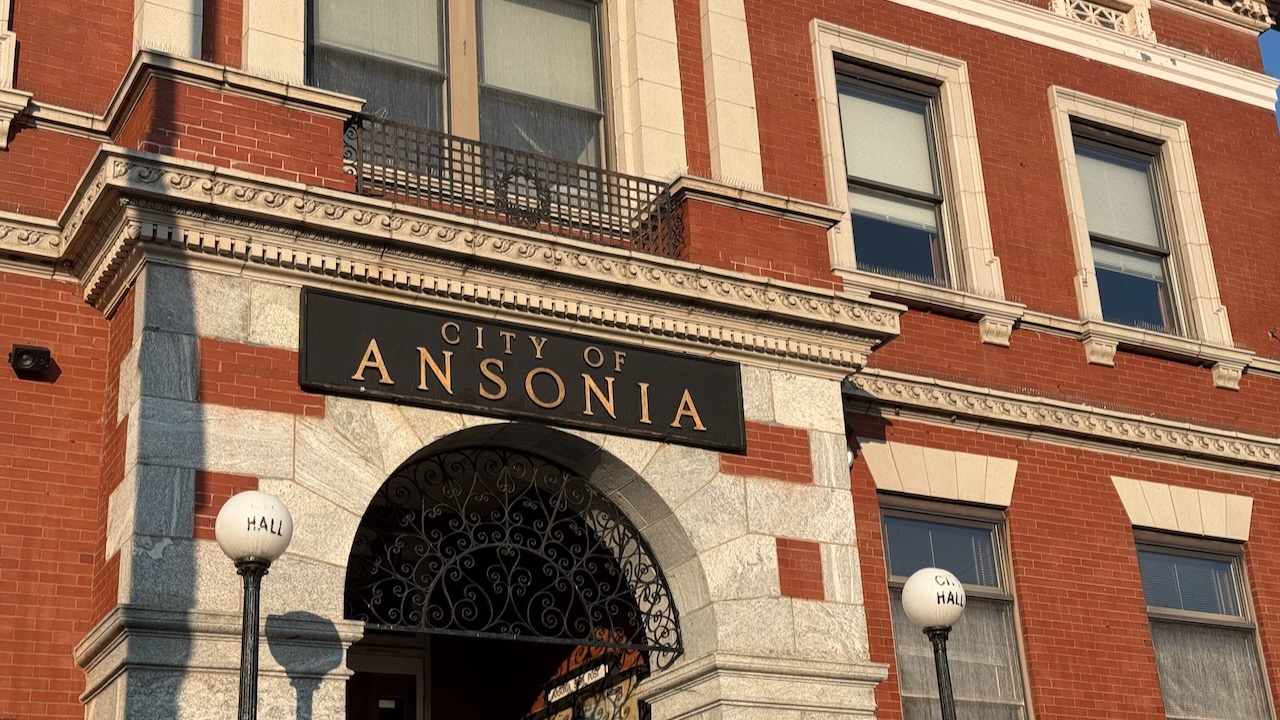

ANSONIA – Ansonia’s debt rating has been downgraded due to an ongoing imbalance in expenses and income, according to S&P Global Ratings.
“The downgrade reflects our view of the city’s ongoing revenue and expenditure imbalance and use of one-time funding sources to balance operations,” the agency wrote in a report dated Sept. 24.
Ansonia now has an A+ rating, down from an AA- rating.
The downgrade means that the agency believes lending to Ansonia is riskier than previously indicated. However, an A+ rating still reflects “a strong capacity to meet financial commitments,” according to the agency’s website.
The agency said in the report that the city’s reliance on money from the $41 million WPCA sale in 2024, a history of keeping taxes flat despite rising expenses, and rejections of multiple proposed budgets at referendum all contributed to the rating downgrade.
However, the report also credits Mayor Frank Tyszka’s administration with making progress toward closing gaps in the city’s budget.
“While the new mayoral administration is making meaningful progress to reduce the city’s structural budget gap, the negative outlook reflects potential political constraints on management’s ability to grow recurring revenue, combined with limited expenditure flexibility, which could exert further downward pressure on reserves,” the report says.
Tyszka took office on Dec. 1, 2025.
The report says that fixing Ansonia’s fiscal issues could be especially difficult, given affordability issues hitting both locally and across the country.
“Given Ansonia’s below-average incomes, Connecticut’s above-average cost of living, and an ongoing U.S. affordability crunch, we will monitor the city’s willingness to generate additional property tax revenue,” the report says.
How Did We Get Here?
The agency previously downgraded Ansonia’s debt outlook in 2024, warning that it was considering lowering the debt rating.
The new report says that Ansonia isn’t bringing in enough recurring income to meet all of its expenses, and that it is continuing to fill the gap with one-time revenue sources.
Those one-time revenue sources include the WPCA sale. The city has used, or plans to use, more than $18 million from the sale and other wastewater assets to fund budgets between 2024 and now.
One-time revenue also includes a $3.25 million “Ansonia rescue fund” which was included in a state budget bill this year.
“We expect Ansonia’s budget to rely on nonrecurring revenue sources over the next few years, including fund balance realized through the prior administration’s sale of wastewater assets to support operations,” according to the report.
The report says the city has had to rely on one-time revenue because property tax rates were held mostly flat under former Mayor David Cassetti’s administration, while spending increased.
“Ongoing fund balance use is partly necessitated by the prior mayoral administration’s decision to hold the tax levy about flat over several years between 2020 and 2025 and voters’ rejection of proposed budgets for fiscal years 2026 and 2027 that included larger property tax increases,” the report says.
Members of Cassetti’s administration have said they held the tax rate steady in order to help struggling homeowners during an economic downturn tied to the COVID-19 pandemic.
However, elected officials under Tyszka’s administration have said Cassetti’s administration held taxes irresponsibly low in order to win elections.
Click here for a discussion between members of the Board of Aldermen and former budget director Kurt Miller on the topic.
Increasing taxes beyond a certain point in Ansonia requires voter approval at referendum, a fact which the agency notes in its report.
A referendum is triggered when a proposed budget would increase the ‘net taxes to be collected’ by more than 3 percent. That’s a charter rule which was supported by members of Cassetti’s administration and approved by voters in 2013.
Under the rule, three budget referendums were triggered in 2025 and one referendum was triggered this year. Voters have rejected every proposed city budget which has gone to referendum.
Members of Tyszka’s administration have sent a charter revision proposal to appear on the ballot this November which would change the trigger – so a referendum is instead triggered when a budget would increase expenses by more than 4 percent.
The agency said the proposed change would give finance officials more flexibility when crafting budgets.
“In November, voters will consider a charter revision to shift the trigger for referendum to a greater than 4 percent proposed expenditure increase, which we believe would incrementally increase the city’s budget flexibility,” the report says.
The report says the agency believes Tyszka’s financial plans would resolve budget issues by raising taxes, while using a combination of city reserve funds, state aid and federal tax rebates to close gaps in the interim. However, it says those plans only work if voters agree to them.
“This plan would require voter approval to implement, either through a city charter revision this November or annual support for tax levy increases,” according to the report.
Click here for a Valley Indy podcast interview with charter revision commission chairman Javier Varas about the proposal.
The report says the alternative is for the city to use more of its reserves, which could negatively impact its bond rating further, or to cut expenses. However, it says Ansonia has limited ability to cut its expenses.
“If voters do not approve budgets that incorporate tax increases, the city will have to utilize additional reserves or make expenditure cuts. While management has internally identified some potential expenditure reductions, it has limited flexibility to make reductions to core municipal services,” the report says.
Fuel Cell Uncertainty Lingers
The report also downgraded a separate rating tied to the fuel cell project on North Main Street.
The rating for Ansonia’s certificates of participation (COPs), a type of bond which was issued to finance the project’s construction, was lowered from “A+” to “A.”
The fuel cell deal became complicated last year, when two different companies claimed they had the right to build a fuel cell on the property. Although the city planned to have a fuel cell up and running by 2025, the dispute ended up before state regulators last October, where it ended with no clear resolution.
Meanwhile, the city is obligated to pay about $63.6 million in principal and interest payments over the lifetime of the project, even though a fuel cell hasn’t been built yet.
Those payments were supposed to be funded through lease payments made by a company operating a fuel cell on the property. However, although the fuel cell hasn’t been built, the payments are still due. The city borrowed $5 million earlier this year to make some of those payments, according to the bond rating report.
A resolution could be in sight after state legislators passed a law which could allow both of the competing companies, HyAxiom and Johnson Controls, to build fuel cells on the property, a fact which the report notes.
However, it says that further construction delays could jeopardize the rating further.
“While the city’s fuel cell project is likely to move forward following passage of a targeted state law, additional construction delays would reduce fuel cell revenue beyond expectation, exerting downward pressure on credit quality,” the report says.
It says the city could also reduce debt risks by selling the fuel cells after they’re built, a step which members of Tyszka’s administration have said they would like to do.
Overall, the report credits Tyszka’s administration with making changes in city budget practices, and says that getting the fuel cell project online could help the city rely less on its reserves.
“We believe the new mayoral administration has improved the city’s revenue and expenditure assumptions and believe the city could maintain reserves compatible of ‘A+’ rated peers if it successfully implements its plan to grow recurring revenue and reduce financial risks associated with the fuel cell project,” the report says.
Tyszka said in an interview that the city is currently in negotiations with both HyAxiom and Johnson Controls to get their fuel cells built. He said conversations are also ongoing with United Illuminating over how much the city can charge for power generated by the Johnson Controls project.
He said building the fuel cells will create a path toward fixing the city’s finances.
“We have to get the fuel cell going. That’s the path,” Tyszka said.
Reaction
Tyszka said, despite the downgrade, the city is making progress toward fixing its fiscal issues.
“Our bond rating is still very solid. I actually thought that we might keep it the same, because we were doing a lot of things that they’re happy with, as far as going after delinquent taxpayers (and) halfway straightening out the fuel cell crisis. We’re not there yet, but we’re about halfway there,” Tyszka said.
He said the fuel cell issue is the core problem affecting Ansonia’s finances, and that the problems started under Cassetti’s administration.
“I didn’t make the mess. I’m just trying to get us out of it,” Tyszka said.
Dana Haigh, the chairman of the Ansonia Republican Town Committee, said Tyszka’s proposed fixes would hit city residents too hard.
“Unfortunately, we all could agree that taxes do need to go up. The difference is the plan of how we get there. There’s different ways to do it. You don’t need to increase taxes all at once,” Haigh said.
Haigh pointed to a proposed 12 percent tax increase next year, which S&P cited in its report.
“That’s going to cripple people. Especially with a high elderly population, people on very fixed incomes, that’s what I worry about,” Haigh said.
Haigh also said he thinks party politics played a role in the fuel cell issue getting resolved. He noted that state regulators blocked a fuel cell deal when Cassetti was in power, and state legislators wrote a law allowing the deal to go forward after Tyszka assumed office.
“This could have already been generating revenue if everybody was on-board, doing what’s best for the city and residents. But instead, in my opinion, party politics got involved, and that’s what really put the city in the financial position they’re in right now,” Haigh said.
Click here for a previous story about the fuel cell issue.