

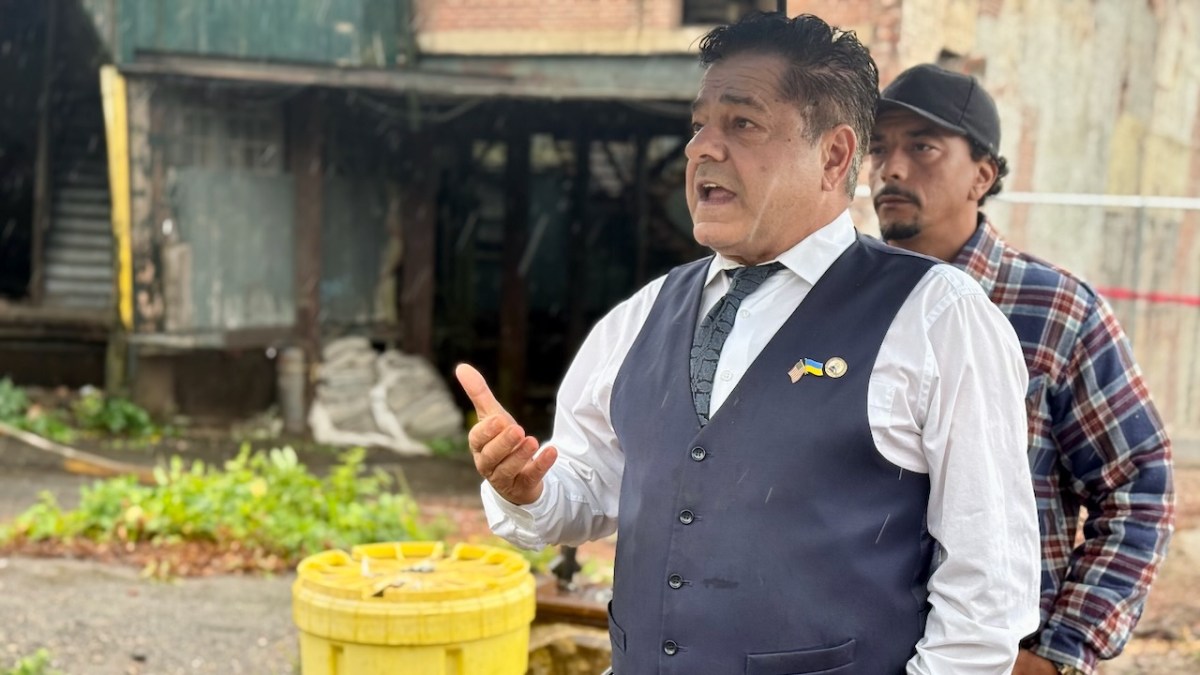
ANSONIA – Ansonia Mayor David Cassetti said ahead of this November’s election that he plans to ban apartment construction at the former Ansonia Copper & Brass complex.
The announcement comes as Cassetti and Ansonia Republicans have said his challenger, Democrat Frank Tyszka, wants to cram high-density apartments into the 60-acre former factory complex. Tyszka, meanwhile, has said Cassetti wants to use the property for a trash-burning plant.
At a press conference announcing the apartment ban Oct. 8, Cassetti pointed to comments made by Tyszka in a Hearst Connecticut article. In the article, Tyszka said Ansonia needed more affordable housing.
“(Tyszka) believes we can cram more dense housing into Ansonia,” Cassetti said. “He believes our taxpayers, our students, and our families should carry the burden for the rest of the state.”
Cassetti said the future of the Copper & Brass site should include manufacturing and other businesses – but not more housing. He noted about 14 percent of Ansonia’s housing stock is legally considered ‘affordable’ by the state, which is more than the 10 percent required by law.
“We have done more than our fair share to address Connecticut’s housing needs. The state’s housing crisis will not be solved on the backs of Ansonia taxpayers,” Cassetti said.
Tyszka said his words were taken out of context by Cassetti. He told The Valley Indy he wants to see more market-rate housing – not more affordable housing – as part of mixed-use developments.
“I support market-based housing,” Tyszka said. “I’ve said that several times, and I don’t want that twisted any more. Market-based is affordable to young families and young professionals, with access to public transportation, such as the train station.”
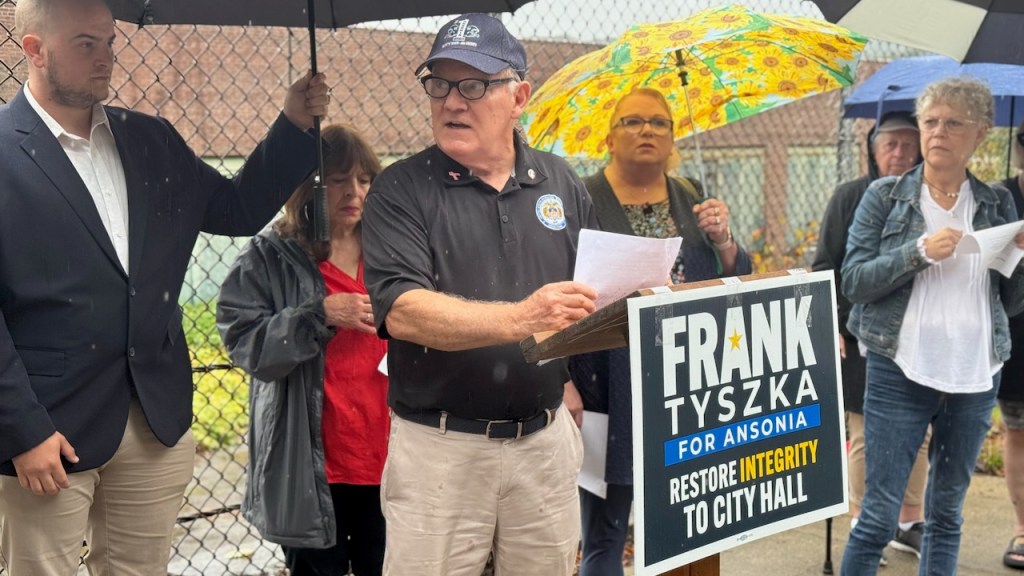
Tyszka said he wasn’t aware that “affordable housing” had a specific legal meaning, and that the city doesn’t need more housing legally deemed affordable by the state.
“(Republicans) are putting words in my mouth,” Tyszka said. “My model for mixed-use in housing is Quarry Walk in Oxford. It’s certainly a better use than a dangerous waste-to-energy plant to favor developers.”
Cassetti, however, compared the idea of apartments to the former, federally subsidized Riverside Apartments on Olson Drive.
“No towers, no co-ops, no sprawling complexes like we saw on Olson Drive. Not now, not ever,” Cassetti said.
He said Ansonia Copper & Brass’s past as a heavy industrial center means it should remain open to businesses only.
“We want jobs and opportunities for businesses to grow here. We don’t need more housing,” Cassetti said.
Since Cassetti first took office in 2013, nearby streets have seen an increase in high-density housing. The Bella Vista development project is in the process of bringing some 200 apartments to Main and East Main streets. And apartments have popped up elsewhere up and down Main Street, alongside a row of new restaurants and businesses.
The city has approved plans that have turned downtown office buildings – such as 158 Main St. – into apartments.
However, Cassetti said those projects are all on lands zoned for residential or commercial uses. He said apartments should not go on industrial land.
At the press conference, Cassetti also said he would ban any trash-burning or waste-to-energy plants at Ansonia Copper & Brass. The announced ban comes after Tyszka held a press conference where he said Cassetti wanted to build such a plant, citing as evidence Cassetti’s words in another Hearst Connecticut article.
Tyszka told The Valley Indy he doesn’t trust Cassetti’s promise to avoid trash-burning on the property.
“The mayor can go back if re-elected and easily re-institute the trash burning proposal immediately after the election. I know he can do it. I was on the Board of Aldermen, I know how it works,” Tyszka said.
Cassetti said the bans on apartments and trash-burning plants would be accomplished by a deed restriction, which he plans to present to the Board of Aldermen at their next meeting Oct. 14. He said overturning the deed restriction would require the approval of two-thirds of voters in a citywide referendum.
Election Day is Nov. 4.