

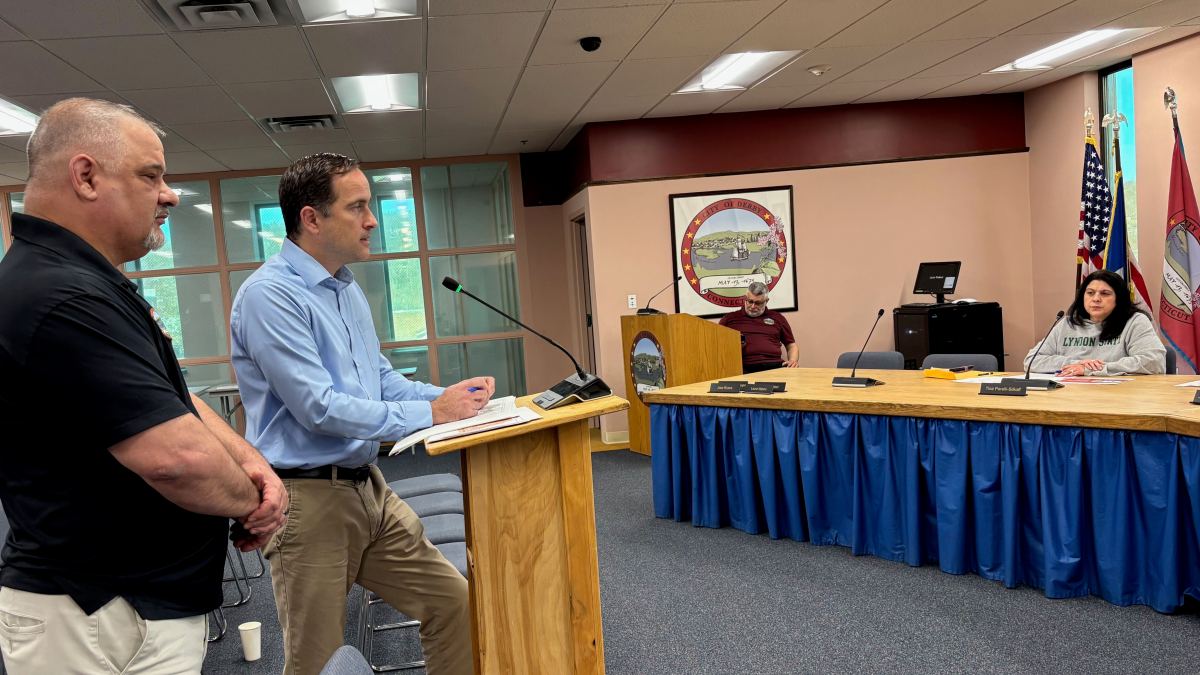
DERBY – The city’s legislative body unanimously voted Feb. 12 to phase in new property assessments over a five-year period.
Doing so will prevent certain state aid from falling off a cliff and lessen the potential for dramatic tax bill increases for many property owners, officials said.
The state requires municipalities to conduct revaluation every five years. The revaluation in Derby saw “mammoth” increases, according to statements made at the Feb. 12 Board of Aldermen and Alderwomen meeting.
The average assessment increased by 60 percent. More than 250 residential property owners saw assessment increases greater than 100 percent.
The vote by members of the Derby Board of Aldermen and Alderwomen Feb. 12 means the new assessments will be phased in at 20 percent a year for five years – at which time the city will be due for another revaluation.
Context
The city’s annual budget process is underway. The Derby Board of Education on Feb. 3 adopted a $20.8 million budget for 2026-2027 that asks for an additional $366,000.
The city’s Board of Apportionment and Taxation – the group of elected officials also known as the tax board who vote on the budget and mill rates – started reviewing department head funding requests on Feb. 10.
Impact?
Assessments are going up for the majority of property owners.
An increased assessment doesn’t guarantee an increased tax bill, but the revaluation – and the fact that assessments are up – complicates the process because the numbers used to calculate tax bills have changed.
When assessments increase, a municipality can lower the mill rate. But it can only be lowered so much, especially if the grand list isn’t showing significant growth.
Derby Finance Director Brian Hall said the city isn’t alone, with assessments skyrocketing throughout Connecticut.
Click here to review the revaluation data.
Do you think your new assessment is too high? Click this link for the paperwork needed to file an appeal by Feb. 20.
Phasing In The New Assessments
Phasing in the reevaluation would prevent sudden, steep tax bill increases for some property owners while promoting budget stability, according to a presentation from Hall.
The current mill rate is 43.2.
Officials said that rate will decrease in the upcoming budget. However, the city’s finance office has been warning that lowering it too much can actually cost the city about $1.2 million in state aid related to motor vehicles.
The state caps the motor vehicle mill rate at 32.4 – meaning Derby can’t tax vehicles based on a higher mill rate. So the state reimburses the city for money Derby doesn’t collect due to the mill rate cap.
Hall said Derby’s long-term goal is to lower the mill rate in a manageable way while working to grow the grand list. Phasing in the new assessments would help that effort by providing stability while the city tries to grow the grand list, he said.
Hall shared a chart showing the city could opt to phase in the new assessments at 20 percent a year for five years.
That same chart shows the mill rate being reduced to 28.2 by the 2030-2031 fiscal year.
Those numbers are forecasts.
“I think that phasing in is a very responsible approach,” Hall told the Alders. “The phase in allows us to gradually absorb these property value increases, prevents a sudden tax increase and will help promote budget stability over the next five years.”
Alderwoman Sarah Widomski asked Hall what other towns have experienced with phasing in revaluations.
Hall said there is an administrative burden attached to phasing in the new assessments – meaning more work for Derby City Hall staff, the assessor’s office in particular. The city’s website shows Derby Assessor Betsy Quist has just one assistant in her office.
Quist said there are some municipalities in Connecticut that always phase in assessments, such as West Haven. She said the City of Torrington saw average assessments increase by 100 percent, so elected officials there opted for a phase in. Milford is also phasing in their new assessments, Quist said.
“They saw a mammoth increase like we did,” Quist said.