

ANSONIA – A consultant hired by Mayor Frank Tyszka’s administration said former officials failed to pursue a federal energy program which could have saved the city up to $1 million.
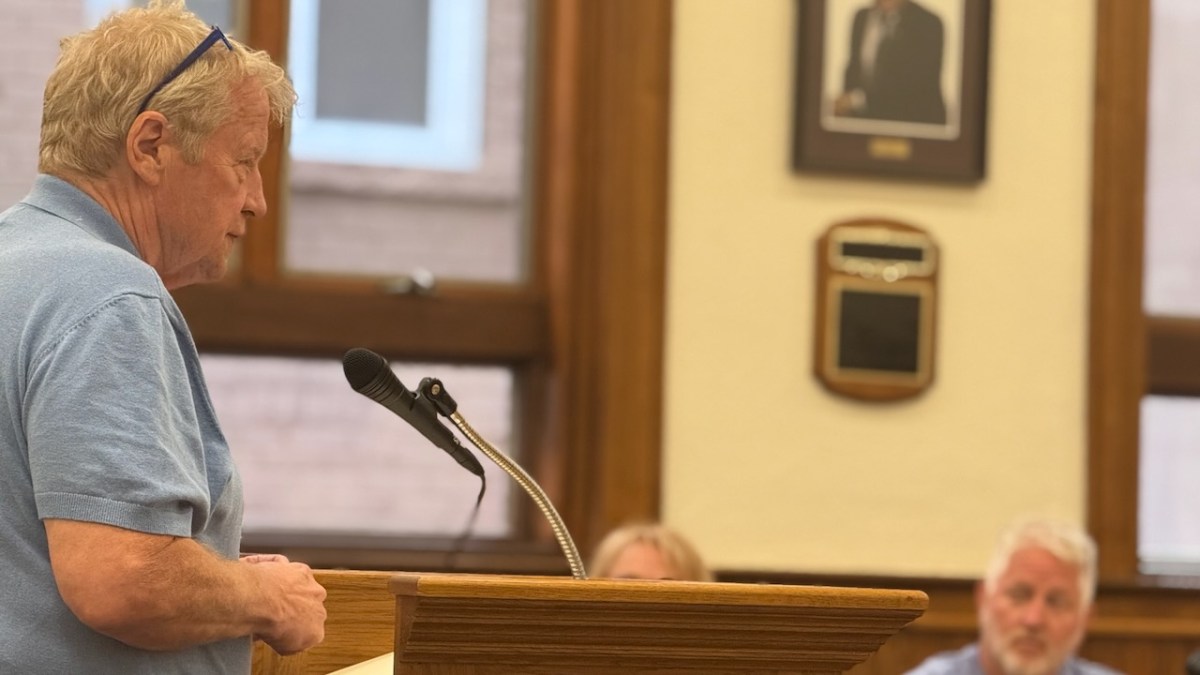
Gary Hale, a renewable energy consultant brought on by Tyszka earlier this year, said finance staff missed deadlines to apply for a tax credit when the city installed solar panels at the landfill on North Division Street in 2024.
“The investment tax credit from the federal government, it’s gone,” Hale said.
Hale spoke during a July 14 meeting of the Board of Aldermen.
“The payback period in Ansonia for the solar project for the landfill is going to be approximately 38 years, because two people at the head of the finance department didn’t do their damn job, and slow-walked when Mayor Tyszka came in,” Hale said.
Hale did not name the two department heads when he spoke. When The Valley Indy asked who he was talking about afterward, Hale said he was referring to Kurt Miller and Richard Bshara.
Miller is the city’s former budget director. Richard Bshara is a longtime finance employee who retired at the end of last year but stayed on to aid in the budget process this year.
Bshara did not return a call for comment.
Miller declined comment.
“I have no comment on their accusations, because I choose not to engage with them. I’m not employed with the City of Ansonia anymore, and I choose not to react or respond to any of their comments,” Miller said.
What Was The Agreement?
In 2021, the Board of Aldermen authorized former Mayor David Cassetti to sign a contract with Johnson Controls International, a firm with offices in Shelton and Rocky Hill.
Under the contract, the city spent about $2.5 million to have solar panels installed at the landfill at the public works facility.
The idea was that those solar panels – which the city owns – would generate revenue, eventually paying for the cost of construction and then some.
Aiding this goal: the U.S. Inflation Reduction Act of 2022. As part of that law, municipalities were allowed to apply for credits to reimburse between 30 and 40 percent of the construction costs for renewable energy projects.
That would have meant reimbursement to Ansonia between $760,000 and $1 million.
However, after the solar panels went online in 2024, the city did not apply for that credit. The deadline to apply passed in May 2025, according to communications shared by Hale.
Now, for the project to pay off its construction costs, it must do so by generating revenue. It currently generates about $67,000 in annual revenue. Aquarion pays the city to use the panels’ power for the wastewater treatment plant.
At that rate, it will take the city about 38 years to pay off the construction costs, Hale said.
Other Johnson Controls Projects
The city also paid about $3.25 million to Johnson Controls to install solar panels at the public parking lot on East Main Street.
The East Main Street project is eligible for about $1.9 million in federal tax credits, according to past statements from finance officials.
Hale said the city has not applied for those tax credits yet but will. He said the deadline hasn’t yet passed.
Hale said the city could look at either leasing or selling the solar panels on East Main Street to generate more revenue.
Johnson Controls is also the party behind one of two planned fuel cells on North Main Street. The fuel cell deal seemed to collapse in front of state regulators last year, but city officials said it has a path forward after state legislators stepped in.
Click here for a story about the deal’s implosion.
Click here for a story about the path forward.
The city is scheduled to make payments to Johnson Controls for the fuel cell until 2045. Neither Cassetti nor Tyszka have budgeted for those payments.
Tyszka said previously that he isn’t budgeting for those payments because the schedule is currently being renegotiated with Johnson Controls, but has not yet shared further details.