
September is both Spinal Cord Injury Awareness Month and Fall Prevention Awareness Month. The two may sound unrelated, but they raise the same question: How do we help people stay strong, mobile, and independent after injury, illness, or as they age?
For families across Shelton and the Valley, this is a very real issue. A stroke, spinal cord injury, Parkinson’s disease, multiple sclerosis, hospitalization, or serious fall can change someone’s mobility quickly. Even normal aging can affect strength, balance, coordination, and endurance.
The good news is that progress can continue.
Recovery Takes Time
One reason is neuroplasticity—the brain and nervous system’s ability to change through repeated practice.
When someone practices standing, walking, reaching, or balancing over and over, the nervous system gets more chances to strengthen those patterns.
But neuroplasticity takes time, frequency, and repetition. Meaningful change may continue for many months and sometimes a year or two or longer. A short therapy visit once or twice a week may not provide enough practice on its own.
That is one challenge with traditional rehabilitation. Physical and occupational therapy are essential, but they are often limited by insurance, visit caps, or time. A person may finish formal rehab while still having important goals ahead.
They may want to walk farther, improve balance, get stronger, use an affected arm more, or simply feel safer and more confident.
For many people, there is a real gap between finishing traditional rehabilitation and being expected to manage on their own.
More Than 40 Years of Experience
My wife, Joanne, and I began this work in Shelton in 1984, when community-based adaptive fitness was still a new idea. We were among the early programs in the country built around a simple belief: people with disabilities should have a place in their own community where they can keep working on strength, mobility, fitness, and independence.
In 2010, that work became Moving With HOPE, a nonprofit based in Shelton.
Over the years, our team has worked with thousands of people living with stroke, spinal cord injury, traumatic brain injury, Parkinson’s disease, multiple sclerosis, age-related mobility changes, and other complex conditions.
Again and again, we have seen that people often have more potential than they think. They may simply need more time, more practice, the right tools, and the right support.
What Makes Moving With HOPE Different
Our approach is simple: Your recovery goals deserve more.
- More Time: Continue training beyond traditional physical therapy and rehab.
- More Repetition: Build strength and function through consistent, guided practice.
- Personalized Support: Programs are built around each person’s goals, abilities, and pace.
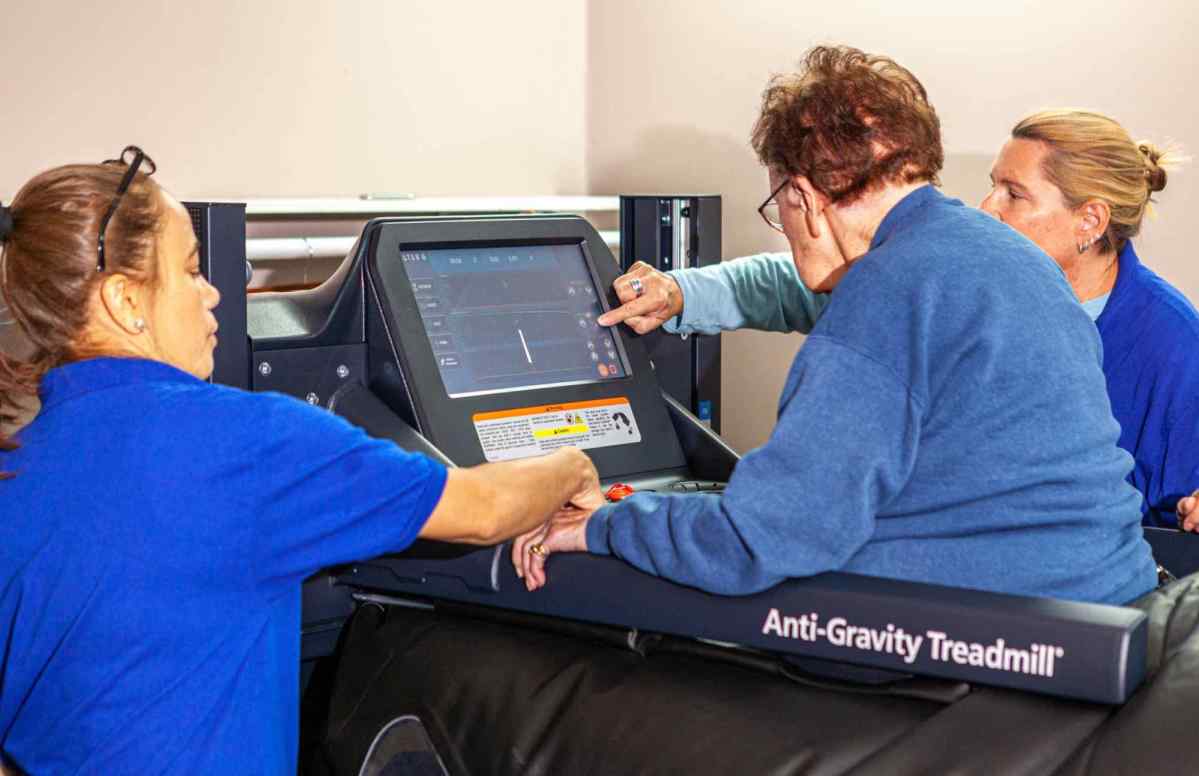
- Advanced Technology: Access tools such as ARC-EX, SMARTfit, FES cycling, and other adaptive equipment.
Moving With HOPE is also a ReAbility-affiliated adaptive fitness center. We use technology to create more opportunities to practice, but technology is only part of the answer. People still need guidance, repetition, encouragement, and a program built around their goals.
Fall Prevention Starts Early
The same ideas matter for older adults.
Falls are not simply an unavoidable part of getting older. Strength, balance, vision, medications, activity level, and the home environment can all affect fall risk.
Practical steps can help: stay active, work on strength and balance, review medications with a healthcare provider, keep up with vision care, and address hazards at home.
Most importantly, do not wait until after a serious fall to start thinking about mobility.
Your Goals Don’t Have to End With Rehab
September is a good time to talk about spinal cord injury and fall prevention. But the larger message applies to many Valley families.
Formal rehabilitation can end before a person’s goals do.
That is why our message is simple:
When Standard Rehab Stops, We Keep YOU Going.
Sometimes progress simply needs more time, more repetition, and the right support.
Moving With HOPE is a Shelton-based nonprofit providing long-term neurorecovery and adaptive fitness programs. More information is available at movingwithhope.org.