

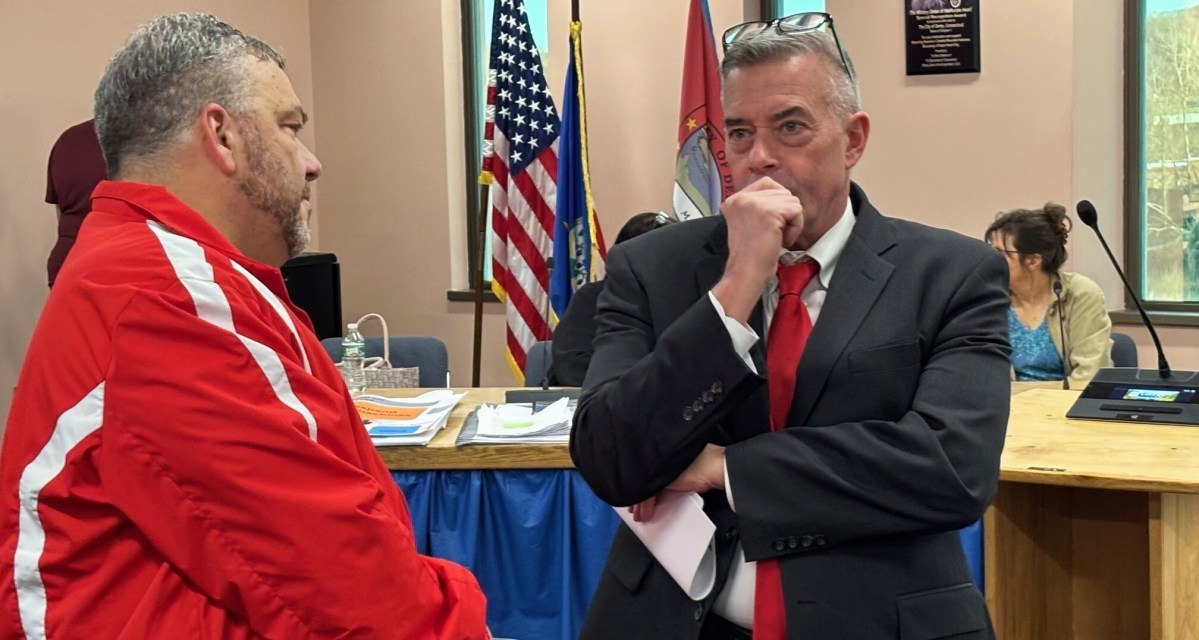
DERBY – The school budget adopted last spring did not include enough money to cover raises for district employees, the city’s finance director said.
The mistake means the current school district operating budget is about $500,000 short on salaries, according to Derby Finance Director Brian Hall.
That’s just the number for the school’s operating budget. The school district also pays for some staff salaries through grants from the feds or state. Those salaries are short by about $300,000, Hall said.
That makes the combined salary shortfall about $800,000 in a total $20.8 million school budget.
However, Hall also said it looks like the school district will be able to cover the shortfall by tightening belts and using grant money.
Hall said he will review the latest financials at a school board meeting scheduled for Oct. 15.
Hall is currently doing two jobs. In addition to city finance director, he has been the interim Derby Public Schools business manager since June.
Hall talked about the budget issue during a school board meeting Sept. 17.
What Happened?
He said that while reviewing the 2026-2027 school budget, he saw a 2.3 percent increase for salaries in the operating budget – from $13.3 million to $13.6 million. Hall said that percentage seemed low because the school board last year included larger pay increases in a new teachers’ union contract.
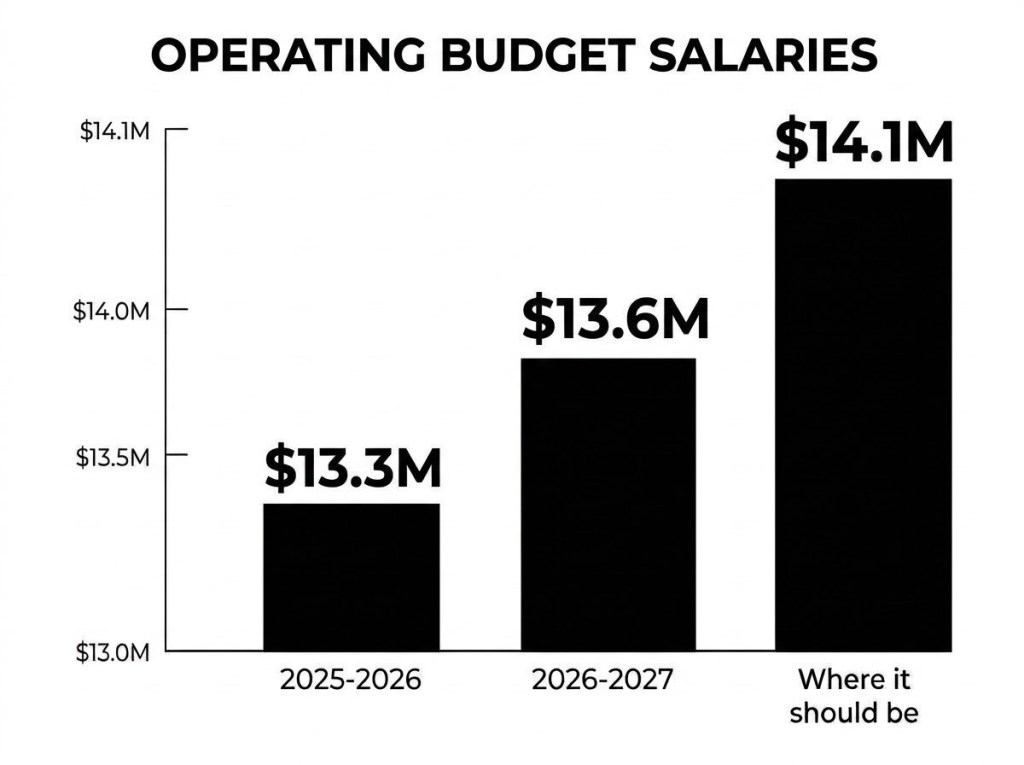
Hall said the salary allocation should have increased by about 6 percent to cover raises approved last year. Because the budget included only a 2.3 percent increase, the district is about $500,000 short of what it needs for salaries.
The district also carries about $5.4 million in salaries that are paid for through federal or state grants. Those grant-funded salaries are short by about $300,000.
Hall said the mistake originated in a formula used last year in an Excel document to calculate the salary line.
“We found that the former business managers had a formula in their budget spreadsheet that just wasn’t picking up the correct salaries based on the new contracts. They just didn’t do it right,” Hall said.
John Spang was the interim business manager when the budget was adopted. He served from January to June.
Hall replaced Spang as interim business manager in June.
In an email, Spang said the current budget’s Excel info was created by his predecessor, Robbie Trainer, the business manager Spang replaced in late January 2026.
Hall confirmed the Excel issue started with Trainor.
“The Excel formula issue originated when Robbie Trainor began the budget process. After Robbie left, Spang assumed responsibility for the budget process and Excel files but did not identify the issue, allowing it to persist until the budget was approved,” Hall said.
Reaction
Derby Board of Education Chairman Kenneth Marcucio Sr. said he is waiting for more data to be shared with the board on Oct. 15 by Hall and Derby Public Schools Superintendent Matthew Conway.
“We are supposed to get an updated report at that meeting to find out exactly how much the shortage is. Most of it should be able to be taken care of through grants, like the Alliance grant,” Marcucio said. “Any kind of a shortage makes you nervous, but luckily we have some of those grants.”
Hall briefed the school board on the issue Sept. 17.
Derby Board of Education member Dan Foley had a concise question: “Bottom line, are we in a deficit?” he asked.
“Bottom line is we are definitely going to struggle to hit this budget number, no doubt,” Hall replied. See the video embedded below.
School board member Jim Gildea said the district will have to tighten belts. He said Sept. 17 that could include a hiring freeze and a moratorium on overtime.
It’s not clear what specific belt-tightening measures are happening. More could be revealed at a school board meeting slated for Oct. 15.

In an email to The Valley Indy, Conway confirmed the salary-formula error and that a review of the current budget is happening.
“We are conducting a line-by-line review of the budget, limiting discretionary spending where appropriate, closely monitoring vacancies and staffing costs, and reviewing the reductions and efficiencies that were identified during our original budget development process,” Conway wrote. “We are also reviewing all available grant resources to determine whether existing expenditures can appropriately be supported through those funds.”
Conway noted that grant money can come with strings attached that dictate how the money can be used.
“Any expenditure moved to a grant must meet the requirements and allowable uses of that particular grant,” he said. “Our goal is to address the variance through a combination of responsible expenditure reductions, operational efficiencies and appropriate use of available funding while protecting the programs and services that directly support students.”

He said the current budget was put together before the district knew how much state aid was coming. The district created different budget scenarios based on various projections of state aid.
In other words – some of the reductions that are now taking place were mapped out last year in case state aid didn’t come through as expected, Conway said.
“We had already identified a range of potential budget reductions as part of our normal budget planning process. Because of the salary projection variance, we are now implementing some of those previously identified reductions to the operating budget,” he wrote.
Click here for a Q&A The Valley Indy conducted with Conway over email.
Mayor Joseph DiMartino credited Hall for discovering the problem.
“He caught it and let them know, and he let them know early enough so that they have time to correct it,” DiMartino said.
DiMartino said the school district’s budgeting has been an issue noted by the Connecticut Municipal Advisory Committee (MFAC). Having Hall overseeing both budgets will solve the problem.
“(The school district) has to do a better job with budgets, that’s for sure,” DiMartino said.
Gino DiGiovanni Jr., the chairman of the Derby Republican Town Committee, said the pattern in Derby is for budget problems to arise and then to point fingers.
“There’s more questions than answers at this point, and the taxpayers deserve a full explanation,” he said. “We need accountability. No more blame game.”
DiGiovanni said he had questioned the fact the teachers’ contract front loaded large increases at a time when residents were reeling from a tax increase and a revaluation.
DiGiovanni noted the school board was scheduled to review the superintendent’s performance at a meeting this week. He said no raises should be granted until the budget issue is addressed.
Still Leaving Oversight?
The City of Derby landed in front of MFAC in 2020 for not handing annual audits in on time and making budgeting mistakes that caused deficits and mill rate increases.
MFAC members have said Derby is in better shape today, and indicated in September that Derby could leave their oversight in early 2027. Click here for a previous Valley Indy story.
When asked whether Derby’s removal is now off the table, Hall said the city has made tremendous financial progress and is in much better shape than 2020.
“While the board of education is facing budget challenges, we have identified the issues, understand their causes, and have a plan to address them,” Hall said. “The key difference is that we have clear visibility into the problem and are taking proactive steps to manage it.”
Hall said the fact he’s now overseeing the finances for the city and the school district is good because everyone is working off the same financial plan.
“I believe that level of oversight and transparency will help demonstrate to MFAC that Derby remains committed to sound financial management and long-term fiscal stability,” he said.
The Budget Process In Derby
The school budget is put together each year by district leaders, starting with school principals and department heads. The superintendent and the business manager create a draft to present to the Derby Board of Education, an elected body.
The school budget is adopted by a vote of the school board, and then sent to Derby City Hall to be reviewed by the mayor, who then presents a budget to the elected members of the Derby Board of Apportionment, also called BOAT, or the tax board.
Ultimately, after public hearings, the tax board votes on a bottom line dollar amount for the school district’s operating budget. The tax board does not have the power to change school budget line items within the budget.
Room For Reform?
Traditionally, Derby Public Schools had a business manager while the City of Derby had a finance director. But both positions have seen turnover.
The school district has had about six business managers in 17 years (including interim managers), while the city has seen about six finance directors come and go over the same period.
Hall was named interim city finance director in late 2023, and the role became permanent in 2024.

A “shared services committee” is currently exploring whether Derby would get more bang for its buck by having one person do both jobs permanently. Click here for info the committee reviewed at its last meeting.
Marcucio said he is for it because it could save money. Hall said a combined position makes sense, too.
“Combining the roles allows you to have enough money to hire a competent finance professional, whereas, maybe historically, it’s been two relatively low-wage positions that did not have strong finance leadership. Both sides have suffered,” Hall said.
Separately, Hall said the annual budget process has to change so that the Derby school district’s grant money gets the same scrutiny as the rest of the school budget.
Grants come in large part from federal and state sources.
“The grant side has always been very separate and oftentimes not even discussed in a lot of these meetings,” Hall said.
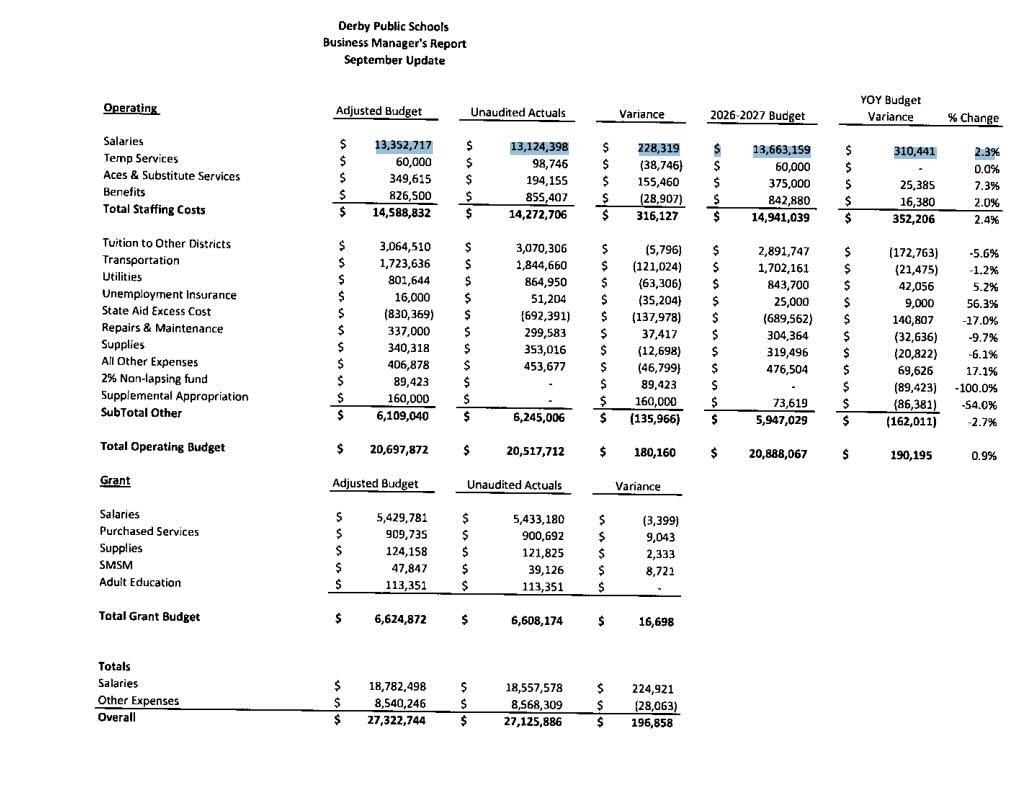
Without a clear grant budget, a piece of the puzzle is missing, Hall wrote in an email to The Valley Indy.
“Without a clear grant budget, hiring and spending decisions may be made before funding is confirmed,” he said. “If grant funding is ultimately lower than anticipated, the district may have limited options to reduce expenses after commitments have already been made. By developing a realistic grant budget during the budget process, decision-makers can make more informed staffing and spending choices, improve transparency, and reduce the risk of significant budget shortfalls later in the year.”
The New Contract
The new teacher union contract was approved by the Derby Board of Education by a 8-0 vote Dec. 18, 2025. Click here for a previous Valley Indy story.
It included an almost 21 percent raise for teachers over four years, including a jump of about 7 percent in year one, according to a summary of the contract shared with the public by the school district during the last school year.
Members of the school board said the raises were needed because Derby teachers were leaving for other districts with better pay.
The Derby Board of Aldermen and Alderwomen approved the new contract at a meeting Jan. 9. At that meeting, school board member Gildea read the names of about 18 teachers who left for better-paying teaching jobs. Several of those were Derby teacher of the year candidates, Gildea said.
Click here for a Valley Indy story on the Alders’ vote.