

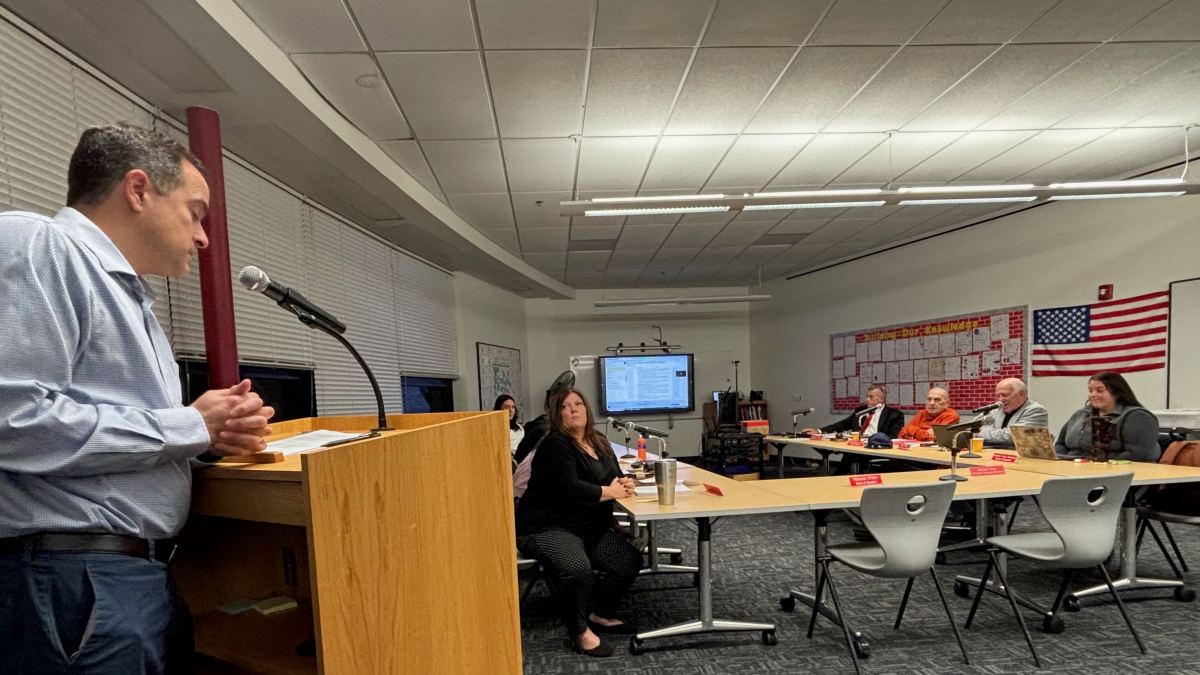
DERBY — School officials said they will use about $800,000 in grants to close a budget deficit caused by a budgeting error.
The problem was revealed to the public in September by Brian Hall, who is the finance director for the City of Derby.
Background
In June, Hall was named the interim business director for the school district, giving him jurisdiction over the separate school and city budgets.
Click here for a previous story from The Valley Indy.
Hall said a mistake in a school district Excel sheet formula led to the creation of a 2025-2026 school budget that did not include money for staff raises approved last year in a new teachers’ contract.
The mistake led to a shortfall of about $500,000 in district salaries and about $300,000 in salaries covered by grant money.
Hall said the initial mistake was made by former school business manager Robbie Trainer and was not caught by an interim replacement last year.
The flawed school budget was approved by the school board Feb. 3. The bottom line school budget was approved by the Derby Board of Apportionment and Taxation April 14 as part of the overall, $51.3 million Derby budget.
The Fix
Hall told the school board at a meeting Oct. 15 that an influx of grant money would cover the $800,000 salary shortfall. He said the district this year is receiving more in annual grant money than it budgeted for, and that there is new grant money coming in.
“Through the (school) administration’s success in securing new grant opportunities, combined with favorable increases in several recurring grant programs, total grant funding increased from approximately $6.6 million last year to $7.6 million this year, an increase of $1 million, or 15 percent,” Hall said.
The money to cover the salary deficit is coming from the following grants, according to the school district:
$275,000 – ESSA SIG, TSI/Focus
$174,000 – Smart Start
$435,000 – Priority school district
$128,000 – Title I
It should be noted that these federal and state grants are coming from tax dollars, just not directly from Derby taxpayers.
The grants listed above total just over $1 million.
While the deficit in the current budget is $800,000, the school district now has to budget for that $800,000 in the next fiscal budget, the planning for which gets underway in weeks.
The school district has also been looking to cut costs as it gets ready to prepare a school budget for the next school year.
Those efforts include not hiring for three open positions, which is estimated to save $190,000. Another $45,000 in discretionary spending is being held back, according to the written response from the district sent to The Valley Indy.
School board members said they were happy Hall caught the mistake and was straightforward in his explanations.
“I get it, and it was a mistake, and there’s no discount from that,” school board member Jim Gildea said during the meeting. “Fortunately, we made a mistake in a year where we got a million dollars more in grants that we didn’t anticipate.”
School board members said it is important for the public to know that the district is not in a deficit, given the data shared Oct. 15.
History Of Broken Budgets
Derby has a history of budget blunders that have led to recovery plans, moving money around, and tax hikes.
It is why city officials have been reporting to the Connecticut Municipal Advisory Commission for six years.
It started after city officials discovered school district grant money had been counted twice by the city finance office during budget cycles in 2016 and 2017.
That meant Derby was budgeting for grant revenue that was never going to arrive. The mistake led to a $2.4 million budget deficit, according to 2020 MFAC testimony from Keith McLiverty, who was serving as Derby acting finance director.
The city compounded the problem by overestimating state grants and underestimating how much it would spend on healthcare.
In response the city, under Mayor Rich Dziekan — who said the problems started prior to being elected — implemented an eight-point recovery plan that included mill rate increases. The 2020 recovery plan is page 85 of this 800-plus page document.
Things went south again in August 2023, when MFAC voted to make Derby’s appearances mandatory. A commissioner said she could not rely on the financial data being submitted by Derby.
As Derby’s financial problems mounted, the city and the school district went through about a dozen people in 17 years as either city finance director or school business manager.
Joseph DiMartino was elected mayor in November 2023. He and the Board of Aldermen/Alderwomen hired Hall as finance director, and charged him with straightening out the books.
Hall said past city budgets had been making overly optimistic revenue projections while underfunding medical benefits, resulting in a deficit of about $2 million.
The first budget under DiMartino raised the mill rate by 4.6 mills, adding another $500 in annual taxes to a property assessed at $112,000. The city also used the last of its COVID-19 federal funding to bail itself out.
The city is on the right track, according to third parties such as S&P Global Ratings, who changed their outlook of city finances in April 2026 from negative to stable.
MFAC also said Derby is doing better, and indicated the city may not have to check in with them in 2027. The city is not on the agenda for the MFAC meeting scheduled in November, which is a positive sign. Click here for a previous Valley Indy story.
School District Criticism
With the city heading in the right fiscal direction, the mistaken Excel formula that didn’t include money for teacher raises annoyed the mayor – especially given Derby’s turbulent budget history.
“(The school district) has to do a better job with budgets, that’s for sure,” DiMartino told The Valley Indy earlier this month.
DiMartino said his administration is taking steps to minimize the mistake from happening again.
A “shared services committee” was formed and its members are expected to recommend that the city’s finance director and the school district’s business manager be merged into a single position.
The thought is that it will be cheaper to have one person doing the job instead of two.
DiMartino said Hall has been doing both jobs since June – and he’s the one who caught the mistake, proving that the arrangement is needed.
Hall has said the school’s grant budget will receive more scrutiny in this year’s budget cycle to help with planning.
Traditionally, officials concentrated mostly on the operating budget, with grants playing a secondary role. That will change this year, Hall said.
During the public portion of the Oct. 15 school board meeting, Derby Town/City Clerk Marc Garofalo criticized the school district on a number of fronts, including the fact the flawed budget made it through approvals.
“When the budget was presented last year, it was presented with less than all the information submitted,” Garofalo said, calling the experience frustrating.
Right Time For A Raise?
The city/town clerk also noted that between telling the public there was an $800,000 shortfall in September and announcing a solution on Oct. 15 – the district on Oct. 6 granted the school superintendent a 3 percent raise and extended his employment contract by a year.
He said the school board was less than transparent about the raise by failing to mention it on the board’s Oct. 6 meeting agenda.
The agenda said the school board would meet in executive session to discuss the superintendent’s evaluation.
It failed to mention the possibility of a vote to award a raise, nor that his contract would be extended. The purpose of posting agendas is to tell the public what’s to be discussed.
The superintendent’s contract extension and pay increase was added to the agenda of the meeting only after the school board met in executive session, which Garofalo, the city’s formal record keeper, said was not transparent.
He also criticized the board for submitting two sets of minutes for the Oct. 6 meeting and said, in general, the district takes too long to release copies of meeting minutes and recordings.
The members of the school board did not respond directly to Garofalo’s criticisms, but member Dan Foley also said the board needs to get meeting minutes faster.
In an interview earlier this month, Gino DiGiovanni, Jr., the chairman of the Derby Republican Town Committee, also questioned why the school district was awarding raises while being $800,000 short on salaries.
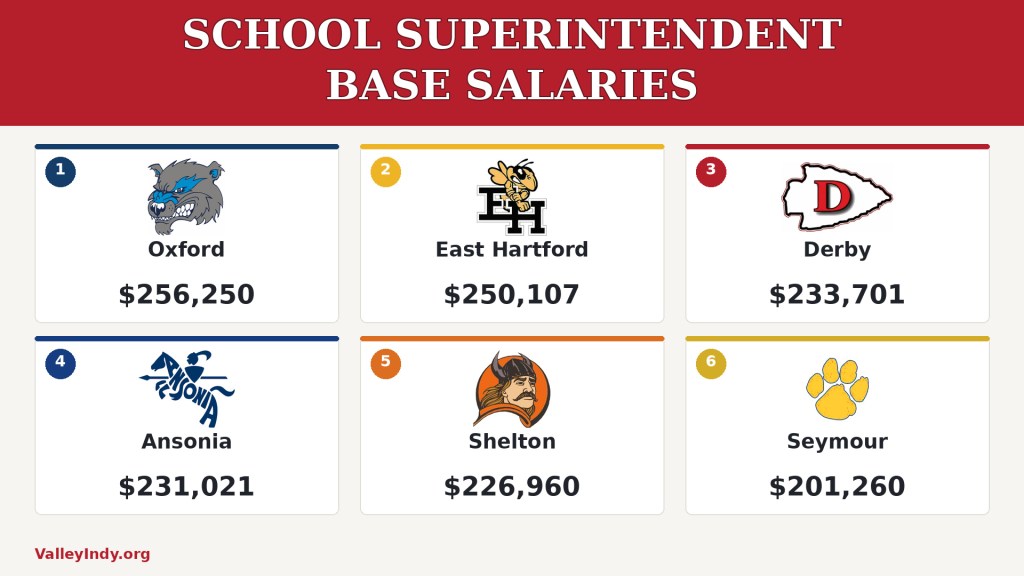
Conway, the school superintendent, is now paid an annual base salary of $233,701.
Derby school board member Jim Gildea said the salary is in line with what Ansonia pays and less than what Oxford pays.
“The three percent salary increase for the superintendent is consistent with the increase provided to all other district employees. It reflects the standard annual adjustment and maintains fairness and consistency across the district,” Gildea said.
He also said the school district does not expect to end the school year with a budget deficit.
“While we have acknowledged a budgeting error and the need for fiscal restraint, we do not anticipate ending the fiscal year with a deficit,” he said. “The board remains committed to responsible financial management while treating all employees equitably.”
The Oct. 6 motion to extend the superintendent’s contract and award a 3 percent raise was approved by a 5-1 vote.
Holly Orazietti said she voted no because the community and the school district needs a change and a fresh set of eyes.
Conway was appointed superintendent in December 2012.